Greek mythology board games transform ancient legends into strategic battlegrounds where players command gods, heroes, and mythical creatures through carefully balanced mechanics. These titles blend thematic authenticity with tactical depth, featuring auction systems that simulate divine favor, asymmetric powers reflecting legendary abilities, and combat mechanics that capture epic confrontations. Each game offers distinct approaches to resource management and area control, creating experiences that demand both strategic planning and mythological knowledge to achieve dominance over the Mediterranean’s sacred islands and legendary realms.
Key Takeaways
- Greek mythology board games combine thematic immersion with sophisticated mechanics like auctions, tactical combat, and strategic building.
- Cyclades features auction-driven gameplay where players bid for divine blessings to gain territorial advantages and recruit mythical creatures.
- Mythic Battles: Pantheon offers asymmetric tactical combat with gods, heroes, and monsters requiring strategic positioning and resource management.
- Santorini provides accessible 3D building strategy with god powers that alter gameplay while maintaining tactical depth for 2-4 players.
- Lords of Hellas combines civilization-building with monster hunting, offering multiple victory paths through construction, politics, or combat elimination.
Top Greek Mythology Games
When examining the terrain of Greek mythology board games, several titles distinguish themselves through their mechanical sophistication and thematic integration. These games transport players to ancient Greece through innovative systems that capture the essence of divine power and heroic struggle.
- Cyclades commands respect with its auction-driven gameplay and BoardGameGeek rating of 8.31199, where strategic bidding determines divine favor
- Mythic Battles: Pantheon delivers visceral tactical combat between gods, heroes, and mythological beasts across detailed battlefields
- Santorini offers accessible entry into Greek Mythology Games with elegant 3D building mechanics and god power asymmetry
- Elysium weaves card drafting with mythological storytelling, creating personalized legendary narratives
- Lords of Hellas fuses territory control with sci-fi elements, providing multiple victory paths for strategic conquest

Cyclades: Gods and Auctions
Cyclades By Asmodee
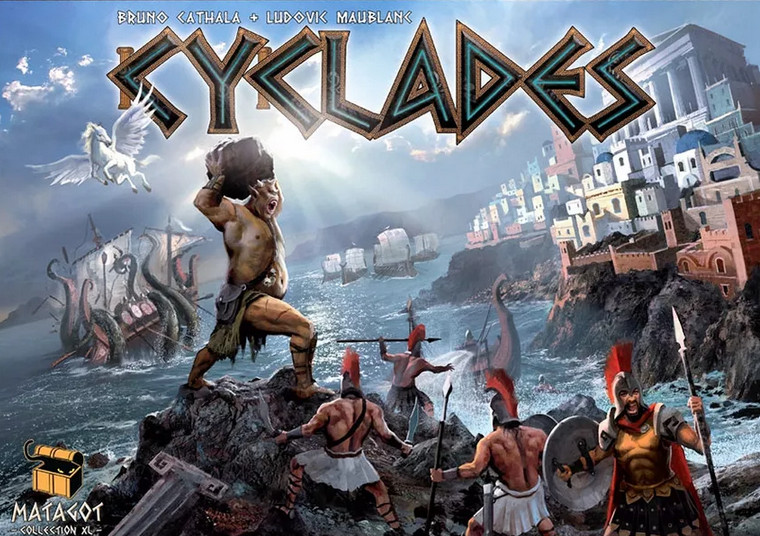
Among the pantheon of Greek mythology board games, Cyclades establishes its dominance through a masterfully integrated auction mechanism that transforms divine favor into strategic currency. Players compete for Zeus, Athena, and Poseidon’s blessings through calculated bidding, where each god unlocks distinct tactical advantages crucial for territorial expansion across Aegean islands.
The auction system functions as the game’s strategic heartbeat, forcing players into risk-reward calculations that determine their civilizations’ fate. Divine patronage facilitates recruitment of mythical creatures and military units, creating layered decision trees where financial commitment directly correlates with battlefield supremacy.
With an exceptional 8.31199 BoardGameGeek rating, Cyclades validates its mechanical sophistication through double-sided maps accommodating various player counts. This Greek mythology masterpiece demands auction mastery, territorial control, and divine alliance management for victory.
Mythic Battles: Pantheon Combat
Mythic Battles By Iello
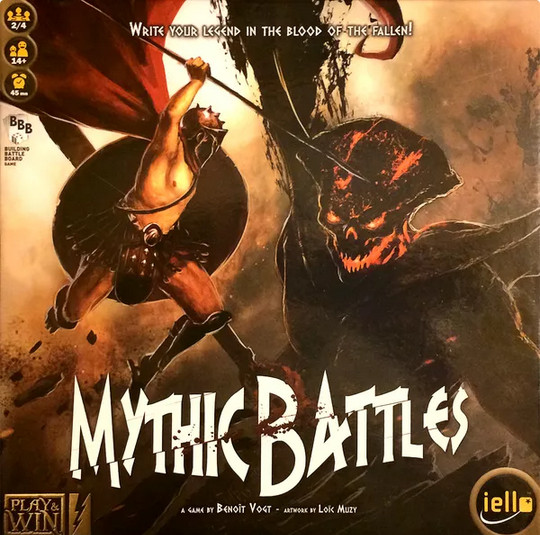
Mythic Battles: Pantheon raises Greek mythology warfare through asymmetric character design, where gods like Zeus and Ares command vastly different tactical approaches compared to cunning heroes such as Odysseus or monstrous titans like the Hydra.
This strategy game demands tactical mastery through resource allocation and positioning. Each character possesses distinct abilities requiring specialized deployment strategies.
| Character Type | Combat Strength | Special Abilities |
|---|---|---|
| Gods | High | Divine Powers |
| Heroes | Medium | Tactical Skills |
| Monsters | Variable | Unique Traits |
| Troops | Low | Numbers Advantage |
| Titans | Maximum | Area Control |
Greek Mythology Board Games rarely achieve this mechanical depth. Victory paths multiply through careful unit synergy and battlefield control. Players must exploit asymmetric advantages while countering opponent strengths. The combat system rewards strategic thinking over random chance, creating meaningful decisions each turn.
Lords of Hellas: Monster Hunting
Lords of Hellas
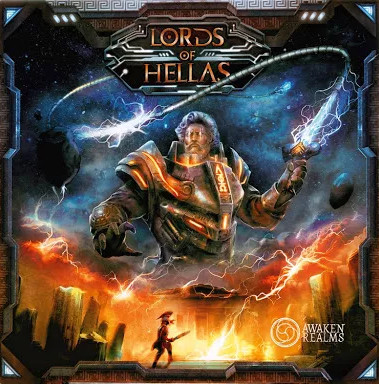
Lords of Hellas transforms the mythological battlefield into a civilization-building arena where monster hunting serves as both strategic objective and tactical necessity. Players command heroes through modular territories, engaging legendary beasts like the Minotaur and Cerberus while developing their civilizations. Combat mechanics integrate seamlessly with resource management, creating tactical decisions that impact both immediate survival and long-term expansion. Unlike traditional Mythic Battles focused purely on warfare, this system rewards diverse victory paths through monument construction, political control, or monster elimination. Heroes possess unique abilities that complement different strategic approaches, while Greek Gods influence battlefield dynamics through divine interventions. The modular board guarantees each session presents fresh territorial challenges, forcing players to adapt their hunting strategies and civilization priorities based on evolving mythological threats and opportunities.
Santorini: 3D Building Strategy
Santorini raises abstract strategy through three-dimensional construction mechanics that transform simple movement into complex positional warfare across the whitewashed terraces of the Aegean. Players command two pawns seeking elevation to victory’s third story while simultaneously building and blocking opponents’ ascension paths.
| Element | Mechanics | Strategic Impact |
|---|---|---|
| God Powers | Unique abilities from Greek mythology | Asymmetric gameplay dynamics |
| Building Height | Three-story construction limit | Vertical positioning warfare |
| Movement Rules | Adjacent space restrictions | Tactical positioning constraints |
The god card system injects Greek mythology directly into mechanical interactions, granting each deity unique abilities that fundamentally alter strategic approaches. From Athena’s construction denial to Apollo’s forced repositioning, these powers create asymmetric scenarios demanding adaptive thinking. The 1.73/5 complexity rating guarantees accessibility while maintaining tactical depth through elevation control and spatial manipulation across multiple game states.
Elysium: Card Drafting Mechanics
While Santorini builds tension through vertical construction, Elysium transforms Greek mythology into a sophisticated card drafting engine where players compete to construct the most prestigious mythological realm across five distinct epochs. Players select quest and family cards strategically, balancing immediate gains against long-term objectives. Each epoch presents tactical decisions as participants must anticipate opponents’ choices while securing cards that synergize with their developing strategy.
The Writing the Legends phase rewards careful resource management and strategic foresight, converting drafted cards into victory points through achieved objectives. Family card variety guarantees exceptional replayability, enabling diverse strategic combinations across multiple games. This Greek mythology-themed experience demands adaptive thinking, as successful players must continuously evaluate evolving board states while constructing ideal paths toward legendary status in their mythological domains.
Pantheum: Authentic Mythology Experience
Though many mythology-themed games sacrifice authenticity for accessibility, Pantheum delivers an immersive experience that honors Greek mythological traditions while maintaining strategic depth through its elemental manipulation mechanics. Players command legendary demigods including Perseus and Chiron, each wielding distinct abilities that reflect their mythological origins. The strategic core revolves around manipulating Elements to construct Environments that align with Divine Plans, creating multiple scoring vectors and tactical decisions.
Pantheum’s visual design authentically captures Ancient Greek aesthetics through cards inspired by Greece’s environments and architecture. The Quick Guide Card streamlines learning without compromising strategic complexity, allowing players immediate access to deeper tactical layers. At $99.99 for the All-In Bundle, the complete Greek mythology experience provides substantial value for strategists seeking thematic authenticity combined with meaningful mechanical choices.
Game Comparison and Selection
Exploring the diverse scenery of Greek mythology board games requires systematic evaluation of mechanical complexity, thematic integration, and group dynamics to identify ideal matches for specific gaming preferences. Game comparison reveals distinct complexity tiers: Santorini’s 1.73/5 rating provides accessible entry points, while Lords of Hellas demands strategic mastery from experienced players. Player scalability considerations influence selection decisions—Cyclades accommodates larger groups through double-sided map configurations, whereas Santorini optimizes 2-4 player experiences. Thematic focus determines strategic approaches: Mythic Battles emphasizes tactical divine combat, while Elysium blends narrative elements with resource optimization mechanics. Strategic Greek mythology board game acquisition involves progressive complexity advancement, beginning with foundational titles before transitioning to intricate systems. Thorough research through player reviews and gameplay analysis guarantees informed purchasing decisions aligned with group preferences and mechanical aptitude levels.