Dinosaur-themed board games present distinct mechanical frameworks that challenge players through asymmetric gameplay, resource management, and strategic decision-making. These titles employ diverse systems ranging from worker placement in park construction scenarios to cooperative rescue mechanics involving time pressure elements. The genre demonstrates how thematic integration can improve core gameplay loops while maintaining competitive balance. Each game’s ruleset creates unique tactical considerations that determine ideal play patterns and long-term strategic approaches.
Key Takeaways
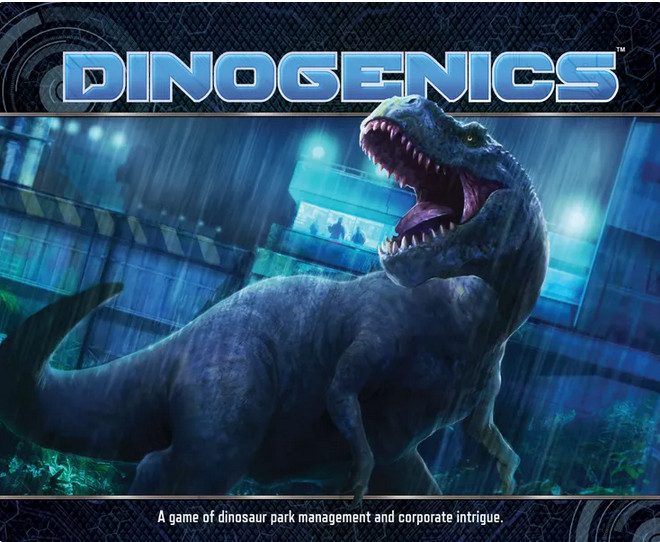
- Dinogenics offers complex worker placement mechanics for resource allocation in dinosaur park management scenarios.
- Raptor provides asymmetric gameplay where one player controls raptors while another plays scientists in strategic combat.
- Dinosaur Island combines dice manipulation with set collection mechanics for building and managing prehistoric attractions.
- Dinosaur World focuses on spatial reasoning through hexagonal tile placement and tactical dice drafting systems.
- Evolution: Climate integrates dinosaur-era themes with climate adaptation mechanics requiring strategic trait development for species survival.
DinoGenics By Ninth Haven Games
Top Dinosaur Gaming Choices
While dinosaur-themed board games span multiple mechanics and complexity levels, five titles represent the strongest strategic offerings in this genre. These dinosaur board selections provide distinct mechanical frameworks that challenge players through varied strategic demands.
Dinogenics leads complexity rankings through worker placement mechanics requiring ideal resource allocation. Dinosaur Island combines dice manipulation with set collection, demanding tactical adaptation. Dinosaur World emphasizes spatial reasoning via hexagonal tile placement systems.
Board games targeting different engagement levels include:
- Raptor delivers asymmetric two-player tactical combat with hidden information mechanics
- Draftosaurus provides accessible drafting mechanics suitable for gateway gaming experiences
- Dinogenics offers the deepest euro-style resource management complexity
Each dinosaur theme implementation creates unique decision trees, ensuring players encounter fresh strategic challenges across different mechanical systems and complexity gradients.
Dinosaur Tea Party Review
Dinosaur Tea Party
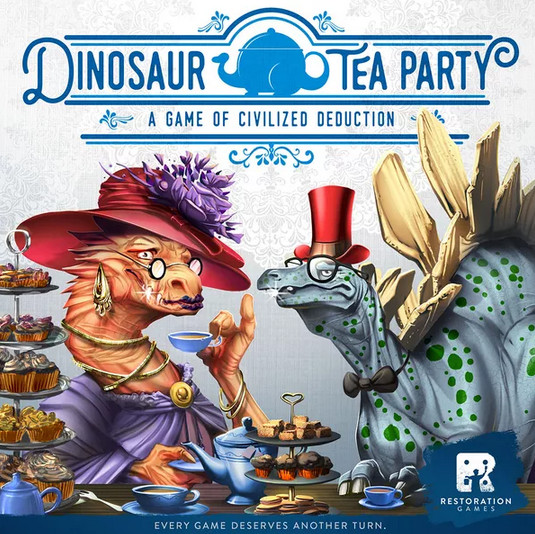
The design incorporates dual complexity tiers—standard and advanced variants—enabling scalable difficulty adjustments without compromising core deduction frameworks. This flexibility maximizes accessibility across diverse skill levels while maintaining strategic depth for experienced players.
Role-playing elements function as optional engagement amplifiers rather than mandatory mechanics, allowing players autonomy in determining interaction intensity. The systematic elimination process demands logical reasoning and pattern recognition, transforming social gatherings into analytical exercises. Critical thinking development occurs naturally through repeated hypothesis exploration and strategic question formulation within the dinosaur-themed framework.
Dino World Strategic Gameplay
How does strategic resource allocation transform entrepreneurial ambition into operational success within Dino World’s competitive framework? Dinosaur World demands tactical dice drafting decisions that directly influence park expansion capabilities. Strategic gameplay revolves around enhancing hexagonal tile placement while balancing thrill generation against safety requirements. The Jeeple mechanic creates dynamic tension between immediate cash flow and long-term sustainability, as Boredom tokens accumulate on previously toured locations. Resource management becomes critical when evaluating diminishing returns from repeated attractions. Players must calculate prime timing for conducting tours versus expanding infrastructure. The five-round structure compresses decision-making windows, forcing prioritization between immediate scoring opportunities and future positioning. Success requires analyzing risk-reward ratios across multiple variables: dice selection, tile acquisition costs, tour revenue potential, and competitive positioning relative to opponents’ park development strategies.
SOS Dino Cooperative Rescue
Cooperative mechanics in SOS Dino prioritize coordinated movement patterns over individual optimization, requiring players to synchronize dinosaur positioning across dynamically shifting volcanic terrain. This cooperative board game challenges participants to execute precise rescue operations while lava tiles progressively eliminate viable pathways. Each drawn tile forces immediate tactical recalculation, as players must adapt their dinosaur formations to maintain access to endangered eggs.
Strategic depth emerges through collective resource management rather than competitive advantage-seeking. Players exercise autonomous decision-making within collaborative frameworks, avoiding authoritarian play patterns that restrict individual agency. Teamwork materializes through distributed problem-solving where each participant contributes unique perspectives to overcome escalating environmental hazards.
The tile-placement system creates emergent complexity, transforming simple movement rules into sophisticated tactical scenarios. Success depends on anticipating lava flow patterns while maintaining flexible positioning options for multi-dinosaur coordination sequences.
Raptor Asymmetric Hunter Mechanics
Asymmetric gameplay defines Raptor’s core tension as players assume fundamentally different roles with distinct win conditions and action repertoires. The mother raptor player seeks to evacuate her offspring or eliminate scientists, while the science team attempts capture through coordinated positioning and tranquilization tactics. Each faction deploys unique action cards that establish exclusive mechanical frameworks—raptor cards emphasize mobility, stealth, and aggressive strikes, whereas scientist cards prioritize formation control, equipment deployment, and systematic hunting protocols.
Simultaneous card selection creates strategic depth through prediction and counter-prediction cycles. Players must anticipate opponent selections while concealing their own intentions, generating psychological warfare layers beyond mechanical execution. This asymmetric game structure eliminates predetermined ideal strategies, forcing adaptive decision-making based on board state evaluation and opponent behavioral patterns. Twenty-minute sessions maintain engagement without commitment overhead, delivering concentrated strategic experiences.
Dinosaur Island Park Building
While Raptor investigates predator-prey dynamics through direct confrontation, Dinosaur Island shifts focus to economic management and resource optimization within a park construction framework. Players establish their dinosaur park through DNA collection mechanics utilizing dice-rolling systems, transforming genetic material into exploitable attractions. The core tension emerges from balancing thrill ratings against security protocols—maximizing visitor throughput while preventing catastrophic containment failures.
Strategic depth materializes through multi-layered resource conversion chains. DNA acquisition feeds into dinosaur creation, which generates attraction values that influence guest capacity and Victory points accumulation. Security investment directly opposes profit margins, creating meaningful trade-offs. Board gaming enthusiasts appreciate the transparent scoring mechanisms where park efficiency translates into measurable advantages. The 90-120 minute timeframe allows extensive strategic development without excessive commitment, appealing to players seeking substantive decision-making autonomy within structured competitive environments.
Fossil Discovery Adventure Mechanics
Unlike park management systems that emphasize economic optimization, fossil exploration mechanics center on excavation probability matrices and resource allocation strategies. Players execute fossil revelation through dice-based excavation systems, with success rates determined by tool quality and site characteristics. Strategic planning involves balancing resource expenditure against potential fossil value, creating risk-reward calculations that define gameplay depth.
| Excavation Phase | Strategic Considerations |
|---|---|
| Site Selection | Tool efficiency vs. hazard probability |
| Resource Allocation | Time investment vs. revelation potential |
| Cooperative Actions | Shared knowledge vs. competitive advantage |
Educational elements integrate seamlessly through species identification mechanics and geological period classifications. Weather events and rival excavator encounters introduce tactical variables requiring adaptive responses. Cooperative mechanics facilitate resource sharing while maintaining competitive tension, allowing players autonomous decision-making within collaborative frameworks that respect individual strategic preferences.
Evolution Climate Adaptation Mechanics
Evolution: Climate transforms species development into a dynamic adaptation system where temperature fluctuations dictate survival parameters through interconnected trait dependencies and environmental pressure calculations. Players manipulate species traits against shifting climate conditions, creating optimization puzzles where defensive capabilities must counterbalance environmental threats. The resource management framework demands strategic food allocation while simultaneously investing in evolutionary pathways that improve climate resilience.
Climate scenarios introduce variable temperature parameters that directly impact species survival thresholds, forcing continuous strategic recalibration. Players develop trait combinations that provide warming or cooling resistance, creating specialized evolutionary niches. The modular board system generates diverse environmental configurations, ensuring strategic depth across multiple sessions. Food scarcity mechanics intersect with climate pressures, requiring players to balance immediate survival needs against long-term evolutionary investments in climate-adaptive traits.