Travel-themed board games utilize geographical mechanics to create strategic depth through route optimization and resource management systems. Players navigate point-to-point movement across mapped territories while balancing risk-reward calculations intrinsic in distance-based scoring. These designs incorporate set collection elements tied to destination cards, creating tension between efficient path planning and opportunistic gameplay. The mechanical framework transforms abstract strategy into thematic exploration, yet the underlying mathematical relationships between movement costs and victory conditions reveal complexities that determine competitive viability.
Key Takeaways
- Travel-themed board games combine geographical exploration with strategic gameplay, offering immersive experiences that educate players about world cultures and locations.
- These games typically feature point-driven progression systems that reward exploration and discovery rather than competitive speed or economic manipulation mechanics.
- Educational benefits include enhanced geographical knowledge retention, cultural curiosity development, and collaborative learning experiences suitable for families and institutions.
- Low-conflict mechanics create non-competitive environments that encourage voluntary exploration and reduce hostility while maintaining strategic depth and engagement.
- Multiple victory conditions and set collection mechanics provide diverse scoring paths, preventing singular strategies while promoting tactical resource management and route planning.
Carcassonne: French Countryside Building

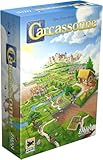
Masterful tile arrangement defines Carcassonne’s core gameplay loop, where players systematically construct the medieval French scenery through strategic placement of square terrain tiles containing cities, roads, monasteries, and fields. Game designers Klaus-Jürgen Wrede crafted mechanics allowing 2-5 participants to claim features using wooden meeples, generating points through completed structures and territorial control. Strategic depth emerges from timing decisions—when to place followers versus when to preserve them for future opportunities.
This accessibility earned Carcassonne recognition among best board games for introducing complex strategy without overwhelming newcomers. Players travel around the expanding terrain, identifying ideal placement positions while blocking opponents’ scoring potential. The 45-60 minute duration accommodates quick sessions without sacrificing meaningful choices. Multiple expansions extend replayability, introducing rivers, traders, and additional mechanics that preserve the core tile-laying foundation while expanding strategic possibilities for experienced players seeking deeper gameplay experiences.
Monopoly: Global Property Trading
Multiple international properties replace traditional Atlantic City locations in Monopoly: Here & Now, transforming the classic real estate acquisition formula into a globe-spanning competition where 2-4 players accumulate world-famous destinations while collecting passport stamps. Contemporary tokens and card mechanics improve the traditional bankruptcy-focused gameplay, maintaining the core strategic elements of property acquisition and resource management. Players navigate competitive trading environments where favorite travel destinations become investment opportunities, requiring careful financial planning and tactical positioning. The one-hour duration balances strategic depth with accessibility, though property negotiations can escalate tensions significantly. Victory demands efficient capital allocation, strategic monopoly formation, and calculated risk assessment across international markets, making this game that’s centered on global property empire-building rather than regional dominance.
Travel Blog: Adventure Journaling
Travel Blog – Europe & USA
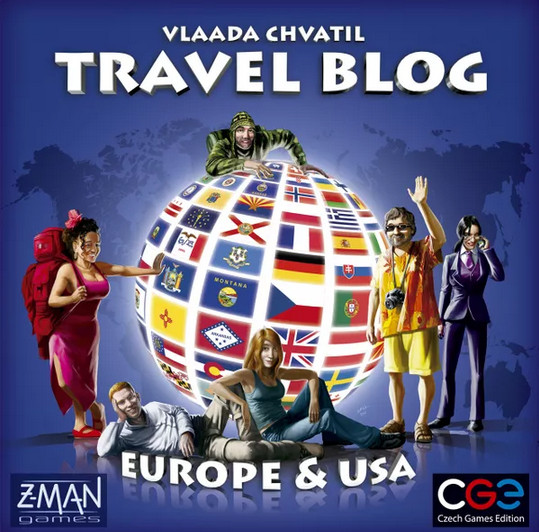
While property empire-building dominates international markets, Travel Blog: Adventure Journaling shifts focus to competitive content creation where 2-6 players race to claim geographical destinations through strategic selection mechanics. Players take turns rapidly identifying states or countries, simulating travel blogger experiences through accelerated decision-making processes. The card game structure eliminates complex movement systems found in traditional travel games, replacing taking trains with pure geographical knowledge competition. Strategic timing becomes essential as players must balance speed against accuracy when claiming destinations. Map familiarity provides tactical advantages without creating insurmountable barriers for novice players. The 30-minute duration maintains engagement while preventing analysis paralysis. Age accessibility from 8+ democratizes participation across skill levels, creating dynamic gameplay where quick thinking trumps extensive preparation, appealing to players seeking intellectual freedom through competitive geography-based challenges.
Ticket to Ride: Railway Routes
Ticket to Ride by Days of Wonder
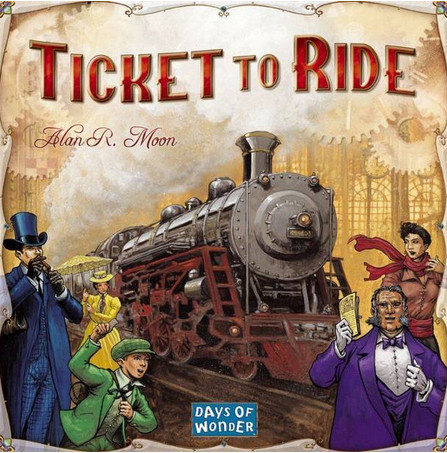
Strategic railroad construction defines Ticket to Ride’s core gameplay loop as 2-5 players compete to establish transcontinental railway networks through systematic card collection and route claiming mechanics. Players accumulate colored train cards to purchase railway segments, with longer routes yielding exponentially higher point values. Destination tickets provide supplemental scoring objectives requiring specific city-to-city connections, creating tension between immediate tactical gains and long-term strategic planning.
The game’s modular design facilitates geographic flexibility through multiple regional editions. Each travel edition introduces distinct route configurations and scoring mechanisms, from the foundational North American map to specialized variants like National Parks, which incorporates unique terrain-based challenges. Simple rule architecture guarantees rapid onboarding while maintaining strategic depth through resource management and route optimization decisions. Sessions conclude efficiently within 30-60 minutes, maximizing gameplay accessibility across diverse scheduling constraints.
Sagrada: Stained Glass Crafting
Dice drafting mechanics anchor Sagrada’s stained glass construction gameplay, where 1-4 players systematically place colored dice onto personal window grids according to rigid adjacency and numerical constraints. Unlike card play systems, Sagrada employs dice selection requiring mathematical precision and spatial awareness. Players cannot place identical colors or numbers adjacently, creating intricate puzzle sequences that mirror real life stained glass artistry.
| Game Element | Constraint Type | Strategic Impact |
|---|---|---|
| Color Placement | Adjacent Restriction | Forces Planning |
| Number Values | Orthogonal Limits | Creates Bottlenecks |
| Window Patterns | Fixed Requirements | Dictates Strategy |
The 30-45 minute duration prevents analysis paralysis while maintaining depth. Players who invest long time studying pattern interactions gain significant advantages. Barcelona’s Sagrada Familia inspiration improves thematic immersion without compromising mechanical rigor. Strategic success demands balancing immediate placement opportunities against future positioning constraints.
Puerto Rico: Colonial Trading
The role selection mechanism drives Puerto Rico’s colonial economic engine, where 3-5 players compete as governors developing Caribbean plantations through asymmetric action phases. Each governor selects roles granting all players specific actions, but the selector receives exclusive privileges. Players must balance plantation construction, crop production, and shipping efficiency while managing limited doubloons and colonists. Throughout the game, governors can take another approach by specializing in building strategies or focusing on trade optimization. Bonus points accumulate through victory point buildings and shipped goods, creating multiple viable paths to dominance. The 90-150 minute duration allows deep strategic planning across age-appropriate complexity for players 12+. Resource scarcity and timing create meaningful decisions without random elements, establishing Puerto Rico as a definitive Euro-game showcasing pure strategic depth.
Flags: World Geography Challenge
While Puerto Rico demands complex economic calculations across extended sessions, Flags of the World shifts focus to rapid geographical recognition through streamlined matching mechanics. This geography-focused game on this list accommodates 2-6 players within 30-minute sessions, eliminating extended commitment barriers that restrict gaming freedom.
Players execute flag-to-country matching through systematic recognition protocols, building thorough global knowledge without artificial constraints. The 8+ age accessibility removes demographic limitations, enabling unrestricted family participation across generational boundaries.
Strategic advantage emerges through memorization patterns and cultural symbol recognition rather than economic manipulation. Unlike Button Shy’s compact designs, this full-sized format provides expansive geographical coverage spanning continents. The low-conflict mechanics promote educational exploration Around the World without competitive hostility, delivering geographical mastery through voluntary engagement rather than forced curriculum structures.