Alien-themed board games have evolved from simple movie tie-ins into mechanically sophisticated experiences that capture the franchise’s signature dread. Titles like Legendary Encounters (2014) pioneered deck-building mechanics infused with cooperative survival elements, while Nemesis (2018) introduced asymmetric objectives and semi-cooperative betrayal systems. These designs translate cinematic tension through resource scarcity, hidden information mechanics, and AI-driven xenomorph behavior—creating frameworks where atmosphere emerges from ruleset interactions rather than thematic overlay alone. Each implementation presents distinct approaches to systematizing horror’s crucial unpredictability.
Key Takeaways
- Alien: Fate of the Nostromo offers asymmetric survival horror for 1-5 players with stealth mechanics and AI-controlled xenomorph encounters.
- Aliens: Another Glorious Day features cooperative tactical combat for 1-6 players commanding Colonial Marines across three interconnected missions.
- Nemesis combines semi-cooperative gameplay with personal objectives, allowing potential betrayal among players in xenomorph-infested spacecraft.
- Burke’s Gambit provides social deduction mechanics for 6-11 players with hidden affiliations and role-specific powers creating paranoia-driven tension.
- Legendary Encounters is a cooperative deck builder spanning all four films with iconic characters and xenomorph encounters.
Top Alien Board Games
The competitive environment includes several mechanically distinct approaches:
- Alien: Fate of the Nostromo emphasizes survival horror through item-crafting mechanics and evasion-focused gameplay aboard the iconic freighter.
- Aliens: Another Glorious Day in the Corps delivers tactical combat via motion tracker systems and mission-based dungeon-crawling with Ripley’s colonial marines.
- Nemesis introduces semi-cooperative tension through personal objectives and potential betrayal mechanics, while Burke’s Gambit implements social deduction within the franchise’s universe.
Each title offers autonomous strategic pathways for unrestricted gameplay exploration.

Legendary Encounters Deck Builder
Legendary Encounters: An Alien Deck Building Game synthesizes cooperative gameplay mechanics with franchise-faithful narrative progression across all four original films (*Alien*, *Aliens*, *Alien 3*, and *Alien Resurrection*). Players embody iconic characters—Ripley, Hicks, Bishop—while constructing optimized decks to neutralize xenomorph incursions and navigate location-specific scenarios. Strategic deck management determines survival probability as players coordinate against escalating alien threats. The expansion introduces competitive gameplay, pitting participants against the Queen Mother in direct confrontation. Artwork merges nostalgic film imagery with original illustrations, creating visual cohesion between cinematic source material and tabletop adaptation. Unlike *Aliens: Another Glorious Day*, which emphasizes tactical combat simulation, *Legendary Encounters* prioritizes narrative immersion through deck-building progression systems. This mechanical framework rewards collaborative planning while maintaining thematic authenticity, offering players agency-driven gameplay that respects franchise mythology without restrictive constraints.
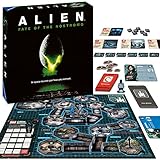
Alien: Fate of the Nostromo
Alien the Game – Fate of the Nostromo
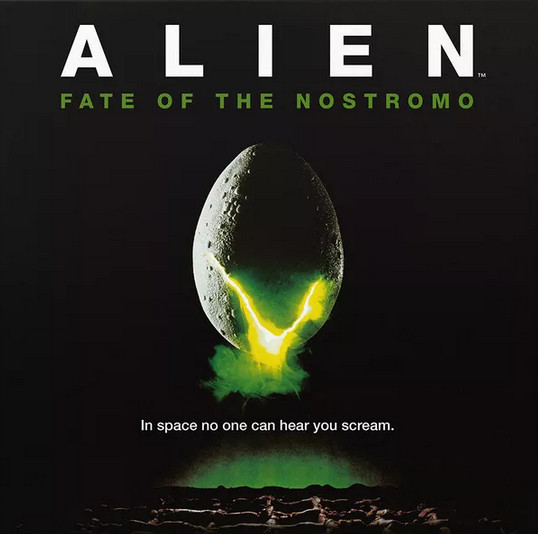
Alien: Fate of the Nostromo distills Ridley Scott’s 1979 claustrophobic horror masterpiece into asymmetric survival gameplay where 1-5 players embody Nostromo crew members—Ripley, Dallas, Lambert, Parker, Brett—navigating compartmentalized ship sections while evading an AI-controlled xenomorph. This cooperative Game prioritizes stealth mechanics over combat engagement, forcing players to scavenge scrap materials for crafting improvised weapons and survival tools. Dynamic objective variation across sessions prevents strategic stagnation, while the optional Ash variant introduces synthetic crew sabotage as an additional failure vector. The sub-60-minute runtime delivers concentrated tension without marathon commitment, mirroring the film’s relentless pacing. Thematic component design authentically reproduces the original Alien’s industrial horror aesthetic, translating cinematic dread into tactical decision-making. Resource scarcity and xenomorph movement patterns create emergent narrative moments that honor the source material’s psychological intensity.
Aliens: Another Glorious Day
Alien the Game – Fate of the Nostromo
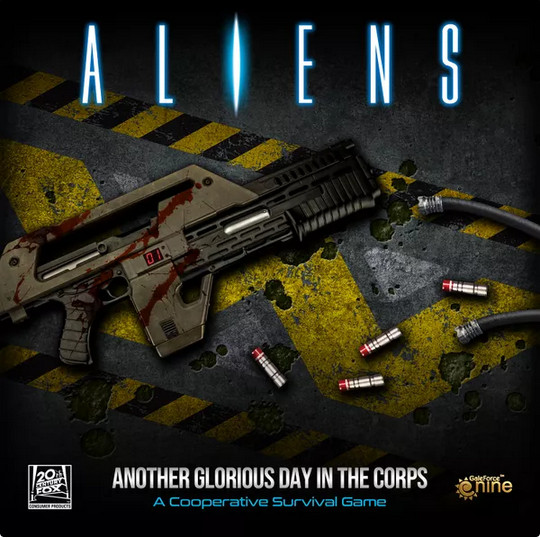
Aliens: Another Glorious Day in the Corps escalates the franchise’s tactical scope from singular-survivor horror to squad-based combat, translating James Cameron’s 1986 action-horror sequel into cooperative campaign gameplay for 1-6 players commanding Ripley, Hicks, Vasquez, and other Colonial Marines against overwhelming xenomorph swarms. This campaign based experience links three successive missions where character survival carries forward, creating meaningful consequences for tactical failures. The motion tracker mechanic generates Cameron-authentic tension, forcing players to balance incomplete spatial information against immediate threats. Detailed character and xenomorph miniatures reinforce the film’s aesthetic while supporting clear battlefield positioning. Objective-driven scenarios demand coordinated fire teams rather than lone-wolf strategies, rewarding players who suppress instinctive panic with disciplined movement and overlapping fields of fire. Announced expansion packs promise additional content beyond the base campaign’s mission structure.
Aliens: Bug Hunt Overview
Streamlining the xenomorph threat into dice-driven abstraction, Aliens: Bug Hunt condenses franchise tactical combat into a 30-45 minute cooperative experience for 1-4 players, prioritizing accessibility over the campaign complexity found in Another Glorious Day in the Corps. Players command colonial marines and iconic franchise characters, each equipped with distinct abilities that inform tactical decisions during xenomorph-infested operations. The core innovation replaces miniature swarms with black dice representing alien threats on exploration tiles, accelerating resolution without sacrificing tension. Three randomized standard missions constitute the survival challenge, demanding coordinated area clearance and threat elimination through strategic character deployment. This design philosophy favors quick session turnover and mechanical transparency, making Aliens: Bug Hunt an ideal entry point for franchise enthusiasts seeking cooperative gameplay without extended time commitments or complex ruleset mastery.
Burke’s Gambit Overview
Pivoting from cooperative xenomorph elimination to psychological warfare, Burke’s Gambit transforms the Alien franchise into a 6-11 player social deduction battleground where corporate espionage and parasitic infection converge aboard a doomed spacecraft hurtling toward Earth. Players assume dual identities—public crew roles with asymmetric abilities and secret affiliations that determine victory conditions. The mechanical tension derives from examining concealed information, deploying role-specific powers for healing or investigation, and parsing behavioral tells to identify the infected. Unlike traditional hidden-role games, Burke’s Gambit compounds the Werewolf formula with Company-mandated objectives that fragment trust networks. The climactic ejection vote transforms accumulated evidence and social reads into irreversible consequences. This social deduction framework captures the franchise’s paranoia-fueled atmosphere while granting players agency to manipulate, deceive, and ultimately determine survival through strategic elimination rather than scripted horror.
Nemesis Survival Horror Game
Nemesis abandons the binary loyalty structures of social deduction games for a semi-cooperative framework where individual survival objectives eclipse collective welfare, transforming the 1-5 player experience into a pressure cooker of calculated betrayal and resource scarcity. Drawing explicit inspiration from the Alien franchise, this survival horror masterpiece implements noise-tracking mechanics that force tactical decisions between stealthy progression and desperate scavenging runs through darkened corridors. Character-specific abilities create asymmetric gameplay opportunities while personal objectives incentivize strategic sabotage of teammates’ endgame conditions. The core loop—restore ship functions, avoid xenomorphic detection, secure personal victory—generates authentic cinematic tension absent in lighter thematic offerings. Multiple expansion packs inject fresh scenarios and characters, extending replayability for enthusiasts seeking escalating complexity within this genre-defining survival horror framework that respects player agency above manufactured cooperative obligations.
Alien: The Roleplaying Game
| Mode | Structure | Duration | Survival Rate |
|---|---|---|---|
| Cinematic | Pre-made scenarios | Single session | Deliberately low |
| Campaign | Sandbox exploration | Ongoing | Character-dependent |
The system acknowledges mortality as mechanical inevitability rather than failure state, honoring franchise precedent where corporate malfeasance supersedes crew preservation. Pre-generated scenarios compress xenomorph encounters into accessible horror vignettes, while extended campaigns expose systemic corruption across interstellar territories—both modes rejecting sanitized outcomes for authentic tension.