Kingsburg’s dice allocation mechanism creates a foundation for strategic resource management that several contemporary board games have refined and expanded upon. Players assign dice results to specific buildings, triggering cascading effects that influence both immediate resource acquisition and long-term development paths. The core tension between securing high-value positions and maintaining flexibility drives player decisions throughout each round. Games sharing this mechanical DNA offer variations on timing, competition intensity, and resource conversion rates that fundamentally alter strategic approaches.
Key Takeaways
- Dice allocation medieval themed games like The Castles of Burgundy and Alien Frontiers share Kingsburg’s core mechanic of strategically assigning dice to buildings.
- Roll for the Galaxy offers similar tactical dice management where players balance immediate resource generation with long-term engine building potential.
- Lords of Waterdeep provides comparable worker placement strategy with quest completion and building construction as primary victory conditions.
- Stone Age combines dice rolling with resource management, requiring strategic decisions about technological progression and building timing like Kingsburg.
- Dice Forge features customizable dice mechanics and resource allocation decisions that create similar strategic depth and player engagement.
Dice Allocation Strategy Games
While traditional strategy games often rely on predetermined resource generation or action selection, dice allocation strategy games introduce controlled randomness through dice rolls that players must strategically assign to achieve ideal outcomes. This mechanism transforms unpredictable dice results into tactical opportunities through careful dice placement decisions.
Players must evaluate multiple factors when allocating their rolled dice:
- Competition intensity – Higher-value spaces typically require stronger dice results but offer superior rewards
- Action timing – Strategic sequencing of dice placement affects resource generation and building opportunities
- Risk mitigation – Balancing guaranteed lower-value actions against potentially blocked high-value positions
Games like Kingsburg exemplify this balance, where players compete for advisor positions using dice results. The Castles of Burgundy and Roll for the Galaxy further demonstrate how dice allocation creates meaningful strategic depth while maintaining player agency over random elements.
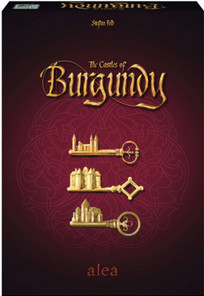
The Castles of Burgundy (Alea 20th Anniversary Edition, 1st Printing)
Lords of Waterdeep Review
Moving beyond dice-driven mechanics, Lords of Waterdeep employs worker placement as its core strategic framework, positioning players as masked rulers competing for dominance over the eponymous city. Players deploy agents to diverse locations, accumulating resources and completing quests that yield victory points. The game’s strategic depth emerges through careful resource management and ideal agent placement timing.
Secret lord identities create uncertainty, as opponents’ true objectives remain hidden until game’s end. Intrigue cards introduce tactical disruption, allowing players to sabotage rivals or secure advantageous positions. The building expansion mechanism allows for permanent location control, creating long-term strategic advantages.
Supporting 2-5 players across 60-120 minutes, the game balances accessibility with strategic complexity. Its 8.3 BoardGameGeek rating reflects widespread appreciation for its refined mechanics and engaging gameplay loop.
Dice Forge Resource Management
Innovation defines Dice Forge’s approach to resource management, where players physically customize their dice by purchasing and installing new faces that generate gold, gems, glory points, and solar shards. This mechanic transforms traditional dice rolling into strategic investment decisions. Players must balance immediate resource collection against upgrading dice faces for superior long-term generation potential. Each turn presents critical choices: spend accumulated resources on temple cards for instant benefits or invest in improved dice faces that compound returns throughout remaining rounds. The dice forge resource management system creates escalating decision complexity as upgraded faces unlock access to higher-tier improvements. Strategic players analyze probability distributions and resource conversion rates to optimize their customization path, ensuring maximum efficiency while maintaining tactical flexibility for evolving board states.
Alien Frontiers Space Colonization
Strategic dice allocation drives Alien Frontiers’ space colonization framework, where players transform rolled dice into worker placement decisions across specialized orbital facilities. Each facility requires specific dice values or combinations, creating tactical choices between immediate resource acquisition and long-term strategic positioning. Players compete for limited facility slots, enabling direct interference with opponents’ plans through strategic blocking maneuvers.
The space station construction mechanic distinguishes Alien Frontiers from conventional dice games, as players invest resources to build permanent structures that provide ongoing advantages and scoring opportunities. These stations create escalating benefits that compound throughout the game, rewarding players who balance short-term resource gathering with infrastructure development. The dice-driven system maintains uncertainty while preserving meaningful strategic depth, earning widespread recognition with its 7.6 rating among strategy gaming enthusiasts.
Stone Age Worker Placement
Stone Age By Z-Man Games
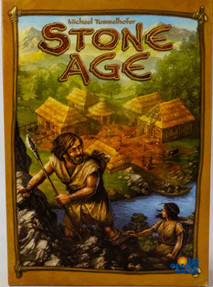
Resource scarcity defines Stone Age’s worker placement mechanics, where players deploy limited tribal members across competing locations to gather wood, clay, stone, and food vital for civilization advancement. Each placement decision carries weight, as workers committed to one location cannot serve elsewhere during that round.
The worker placement system operates on quantity-based returns, where multiple workers generate proportionally greater resources. Players must balance immediate needs against long-term technological development, as resources fuel both structure construction and advancement tracks.
| Resource Type | Primary Use |
|---|---|
| Wood | Basic structures |
| Clay | Advanced buildings |
| Stone | High-value constructions |
| Food | Worker sustenance |
| Gold | Flexible purchasing |
Strategic depth emerges through technological progression, which unlocks scoring multipliers and efficiency bonuses. Victory requires optimizing worker allocation across resource gathering, building construction, and advancement opportunities while adapting to opponents’ placement choices.
Troyes Medieval Dice Management
Dice cascade through three distinct social hierarchies in Troyes, where players manipulate colored cubes representing nobility (red), clergy (white), and peasantry (yellow) to execute actions across medieval France’s power structures. This medieval dice management system breaks conventional board games restrictions by allowing players to purchase opponents’ dice or modify values through resource expenditure. Each die type unlocks specific action categories: military defense, religious activities, and civic construction.
Strategic depth emerges through dice allocation decisions and timing calculations. Players must balance immediate tactical needs against long-term resource accumulation while maneuvering competitive action space acquisition. Random events create dynamic pressure requiring adaptive responses from all participants.
The manipulation mechanics transform luck-based outcomes into calculated risks, enabling skilled players to engineer favorable probabilities. Resource investment decisions determine operational flexibility, rewarding those who optimize their dice portfolio management across multiple strategic vectors.
Yahtzee Adventure Dice Rolling
While Troyes emphasizes calculated manipulation of purchased dice across medieval power structures, Yahtzee Adventure transforms the familiar probability framework of classic Yahtzee into a quest-driven progression system where character abilities modify standard rolling mechanics.
| Game Element | Kingsburg | Yahtzee Adventure |
|---|---|---|
| Dice Usage | Influence allocation | Quest completion |
| Player Powers | Building bonuses | Character abilities |
| Victory Path | Resource accumulation | Adventure progression |
Players navigate an adventure board while leveraging special abilities that influence dice outcomes and scoring opportunities. The cooperative and competitive modes offer different things for varying group dynamics. Character selection becomes strategically significant, as each provides unique dice manipulation advantages. Risk assessment intensifies through the adventure framework, where players must evaluate ideal timing for aggressive rolling versus conservative advancement, creating tactical depth beyond traditional Yahtzee’s luck-dependent scoring patterns.
Machi Koro Dice Building
Economic engines drive Machi Koro’s dice-building framework, where players construct cities through strategic establishment purchases that activate on specific die roll results. Players roll dice to trigger buildings they own, generating coins based on numerical outcomes. The core mechanic revolves around acquiring establishments that respond to different dice combinations, creating cascading economic effects.
Strategic depth emerges through building selection timing and resource allocation decisions. Players must balance immediate coin generation against long-term synergistic potential when they build buildings. Restaurants activate on opponents’ turns, providing passive income streams, while shops require personal dice rolls for activation.
The game accommodates 2-4 players within 30-minute sessions, offering accessible entry points for strategic gaming. Victory conditions center on constructing four landmark buildings, demanding careful economic planning and tactical dice management throughout gameplay progression.
Engine Building Mechanics Analysis
Engine building mechanics transform static resource collection into dynamic systems that amplify player capabilities through cascading improvements. These mechanisms create exponential growth patterns where early investments compound into powerful late-game advantages. Players construct personal tableaus that generate increasingly efficient resource production, action selection, and scoring opportunities.
Strategic depth emerges from timing decisions and resource allocation priorities. Games like Macao demonstrate how dice-driven resource management integrates with engine construction, while The Castles of Burgundy showcases tile-based tableau building. Race for the Galaxy exemplifies technology development engines that unlock expanded capabilities.
Successful engine building requires balancing immediate tactical needs against long-term strategic positioning. Players must evaluate opportunity costs between early scoring and infrastructure investment. The mechanic rewards forward-thinking players who identify synergistic combinations and optimize their production chains for maximum efficiency.