Naval-themed board games present distinct mechanical frameworks that separate casual maritime adventures from sophisticated strategic simulations. Resource allocation systems intersect with positional combat mechanics, creating decision trees where tactical positioning determines economic viability. Games like Captain Sonar implement real-time submarine warfare through grid-based movement and sonar detection protocols, while Merchants & Marauders employs variable player powers alongside dynamic market fluctuations. The genre’s complexity emerges from layered probability calculations that govern everything from weather patterns to cargo pricing structures.


Key Takeaways
- Naval strategy games like Pacific Victory and Empire of the Sun offer deep tactical gameplay with advanced modeling systems and extensive scenarios.
- Combat mechanics feature layered probability systems combining dice rolls, ship statistics, positioning modifiers, and environmental conditions for realistic naval warfare.
- Economic-focused games emphasize trade route management, fleet optimization, and balancing legitimate commerce against piracy for accumulated wealth victory conditions.
- Popular titles include Captain Sonar for submarine warfare, Merchants & Marauders for trading, and Libertalia for pirate crew building mechanics.
- Games span historical periods from Civil War to World War II, incorporating authentic maritime elements like crew management and shipbuilding.
Top Naval Strategy Games
Naval strategy games demand precise tactical execution and systematic resource management, with several titles establishing themselves as definitive simulations of maritime warfare. These board wargaming classics deliver uncompromising strategic depth through sophisticated simulation models that require careful consideration of terrain effects and combat outcomes.
The premier naval warfare titles include:
- Pacific Victory – Concentrates exclusively on Pacific War operations with thorough strategic mechanics
- Empire of the Sun – Card-driven system simulating regional WWII strategic conflict through dynamic gameplay
- The Great Pacific War – Emphasizes historical accuracy in critical naval engagements with detailed decision-making frameworks
Publishers like GMT Games and Decision Games utilize advanced modeling systems that challenge players to master complex operational parameters. Battle of Midway adaptations from Avalanche Press feature extensive counter systems and multiple scenarios, while newer titles like Imperial Sunsetcontinue expanding the genre’s tactical possibilities.
Captain Sonar Submarine Warfare
Captain Sonar (2022 Edition)
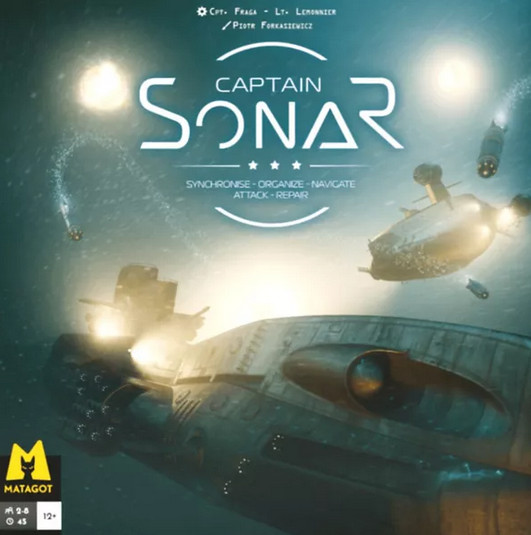
Grid-based movement tracking facilitates precise positioning while radio operators intercept enemy communications to triangulate locations. Two-minute rounds demand rapid decision-making and flawless coordination between teammates. Engineers manage system damage while captains navigate and launch attacks.
Operation Dragon expansion introduces advanced scenarios and improved tactical options, deepening strategic complexity. Success requires seamless information sharing and synchronized execution across all crew positions. The game eliminates traditional turn-based constraints, forcing players into genuine pressure situations that mirror actual submarine warfare tension and communication demands.
Merchants & Marauders Trading
Merchants & Marauders
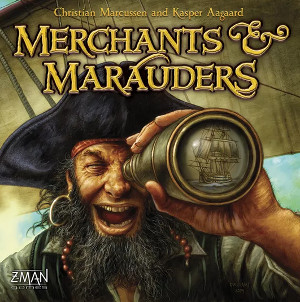
While Captain Sonar demands real-time coordination between specialized crew roles, Merchants & Marauders shifts focus to individual economic optimization and tactical fleet management across the Caribbean’s trading networks. Players make use of dynamic market mechanics to maximize profit margins while maneuvering through reputation systems that unlock strategic advantages. The game’s dual-path progression allows merchants to accumulate wealth through legitimate trade routes or pirates to plunder rivals through naval battles and raids. Fleet composition becomes critical as ship characteristics directly impact cargo capacity, combat effectiveness, and movement efficiency. Mission objectives create competing priorities that force players to balance immediate gains against long-term positioning. Success requires adapting strategies based on market fluctuations, opponent movements, and random event disruptions.
Libertalia Pirate Crew Building

- Goal: In the world of Galecrest, sky pirates set sail on the winds in search of adventure, treasure, and glory. As an admiral, you command a vast and varied crew…but so do your rivals sailing other ships in the pirate fleet.
- Gameplay: Each day the fleet lands on a different island where you’ll send a crew member to collect your share of the loot, hoping they’ll return to boost your growing group of characters.
- For families, solo gamers, and game groups alike: This hand management and set collection strategy game for 1-5 players has a 45-60 minute playing time with only a 5 minute setup time. Libertalia is also very easy to explain and teach. Great game for couples, solo gamers, 2 players, family, and friends making this an excellent gift!
- Beautifully Designed and Illustrated: Designed by Paolo Mori (Ethnos). Illustrated by Lamaro Smith (The Girl Who Made the Stars).
- High Quality Components: Thick, colorful tiles that have a good weight in your hand, fun scoring dials with wheels that turn, and a wonderful insert to easily store and set up the game.
- Thematically Designed Mechanisms: Game actions match the character art and title, like the explorer character searches for maps and the treasurer deals with coins.
- Solo Play: Features an Automa to play against in a 1-player game for a fun solitaire experience. The Automa simulates an opponent for you to compete against, while your game as a player remains the same. On the Automa’s turn, flip a card to see what action it takes.
- Similar Games: If you like Mission: Red Planet, Broom Service, and other hand-management games, we think you will enjoy sneakily managing your crew in Libertalia: Winds of Galecrest!
- New Edition: A completely revised, expanded, and refreshed edition of the classic pirate game that includes all-new art, 40 characters per player, a reputation system to resolve tiebreakers, deluxe loot tokens.
- Published by Stonemaier: Stonemaier is a tabletop game publisher based in St. Louis and distributed worldwide. Stonemaier's brands include Viticulture, Euphoria, Between Two Cities, Scythe, Charterstone, My Little Scythe, Between Two Castles, Wingspan, Tapestry, Pendulum, Red Rising, Rolling Realms Collection, Libertalia, Smitten, Expeditions, Apiary, Wyrmspan, Stamp Swap, Finspan, Tokaido, Vantage, Origin Story, Duel of Meloch, and Wingspan Pocket.
Though Libertalia abandons the economic complexity of traditional trading mechanics, its card drafting system creates intricate crew optimization puzzles that demand precise timing and resource allocation. Players draft identical crew members simultaneously, then reveal selections for tactical positioning battles. Each crew card’s rank determines action order, while special abilities trigger during specific phases of treasure distribution.
The hidden agenda mechanism forces captains to balance immediate tactical gains against long-term treasure objectives, creating tension reminiscent of classic naval confrontations. Unlike traditional board wargames emphasizing direct combat, Libertalia’s conflict emerges through positional warfare and crew synergies. Strategic depth develops through predicting opponents’ selections while maximizing personal treasure acquisition. The 40-60 minute timeframe maintains engagement without excessive complexity, allowing multiple sessions for evolving strategies.
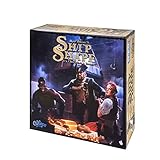
Shipwrights Crafting Naval Vessels

- Strategic Shipbuilding: Construct Viking ships and buildings to earn victory points while competing for limited oak, wool, iron, and craftsmen resources
- Beautiful Viking Aesthetics: Enjoy premium quality components featuring awesome Viking, ship, and resource meeples plus stunning Nordic-inspired artwork
- Family-Friendly Strategy: Perfect for ages ten and up with two to five players, offering engaging gameplay that bonds families around meaningful screen-free entertainment
- First in the North Sea Trilogy: Start your complete collection with this acclaimed worker placement game followed by Raiders of the North Sea and Architects of the North Sea
- Includes Townsfolk Expansion: Base game comes with the Townsfolk Expansion board and shields, adding variety and extended replay value without extra purchase
Unlike crew-based drafting mechanisms, Shipwrights of the North Sea employs worker placement and resource conversion systems where players construct Viking vessels through systematic timber, ore, and gold acquisition. Strategic shipwrights balance resource gathering with skillful worker deployment to maximize naval construction efficiency.
| Resource Type | Primary Function |
|---|---|
| Timber | Hull construction foundation |
| Ore | Reinforcement and weaponry |
| Gold | Advanced ship capabilities |
Victory points correlate directly with vessel size and functionality, rewarding calculated investment over hasty expansion. Players improve shipwright expertise through expansion scenarios, introducing complex naval engineering challenges. The historical Viking Age context provides authentic shipbuilding procedures while maintaining strategic depth. Resource conversion ratios demand precise planning, as inefficient allocation hampers fleet development. Each constructed vessel represents accumulated strategic decisions, making every timber purchase and worker placement critical to naval supremacy achievement.
Viking Raiders Naval Conquests
Viking Raiders by Neowulf Games
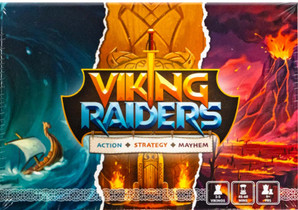
Two to four Viking leaders command distinct vessels across Raiders’ modular board system, executing maritime raids through integrated combat and resource mechanics. Each playthrough reconfigures the board layout, generating unique tactical scenarios that demand adaptive strategic thinking. Players utilize specialized ship capabilities and crew abilities to optimize raiding efficiency while managing finite resources.
As part of the broader landscape of Viking themed games, Raiders implements ship-to-ship combat sequences alongside territory-based resource extraction, creating multiple victory pathways. War at Sea dynamics emerge through competitive positioning and timing of aggressive maneuvers versus defensive consolidation. Strategic depth derives from balancing immediate tactical gains against long-term expansion objectives.
Sessions typically conclude within 60-90 minutes, allowing concentrated strategic engagement without excessive time commitment. The modular board guarantees consistent replayability through varied geographical challenges and resource distribution patterns. This design philosophy positions Raiders among contemporary Viking Themed Board Games that prioritize variable setup and emergent gameplay over predetermined scenarios, ensuring no two raids unfold identically.
Deep Sea Adventure Exploration
While Deep Sea Adventure constrains players within a shared oxygen pool, treasure hunters must calculate precise risk-reward ratios across three increasingly perilous diving rounds. This competitive diving simulation forces 2-6 players into tactical oxygen management while maneuvering underwater cave systems. Players autonomously determine diving depths, balancing treasure acquisition against return journey requirements. The shared oxygen mechanic creates inevitable player interdependence—reckless diving depletes collective resources, potentially stranding entire expeditions.
Strategic treasure theft mechanics facilitate aggressive repositioning, allowing players to liberate valuable artifacts from competitors through calculated positioning. Each diving round escalates difficulty, demanding increasingly sophisticated risk assessment. Players maintain complete agency over movement decisions, treasure selection, and timing strategies. Deep Sea Adventure games offer uncompromising freedom within structured survival parameters, rewarding bold decision-making while punishing overcautious approaches through competitive disadvantage.
Find more see themed board games here.
Trans Atlantic Maritime Trading
Maritime trading games improve resource management complexity beyond underwater treasure hunting through dynamic market systems and route optimization mechanics. Transatlantic maritime trading simulations challenge players through fluctuating commodity prices, seasonal weather patterns, and competitive shipping lane control. Age of sail mechanics typically incorporate wind direction calculations, cargo capacity limitations, and port taxation systems that demand strategic adaptation.
| Trade Route | Primary Commodities | Risk Factors |
|---|---|---|
| Europe-Caribbean | Sugar, Rum, Tobacco | Pirates, Storms |
| Americas-Europe | Cotton, Raw Materials | Naval Blockades |
| Triangular Routes | Manufactured Goods | Market Volatility |
| Colonial Ports | Textiles, Weapons | Political Tensions |
Players must balance cargo diversification against specialized shipments while managing crew morale, vessel maintenance, and insurance costs. Victory conditions often emphasize accumulated wealth through efficient trade networks rather than territorial conquest, rewarding economic freedom over military dominance.
Nautical Combat Mechanics Analysis
Most nautical combat board games employ layered probability systems where dice rolls interact with ship statistics, positioning modifiers, and environmental conditions to determine engagement outcomes. Games spanning Civil War ironclad duels to World War II carrier battles utilize extensive mechanics addressing morale degradation, structural damage, and crew actions. Scale selection between 1:1200 and 1:6000 directly impacts tactical granularity and unit density constraints. Advanced systems incorporate boarding party mechanics, artillery effectiveness tables, and surrender protocols that grant strategic flexibility. Players must balance aggressive engagement against preservation tactics, as operator decisions significantly influence probabilistic outcomes. Fast-playing systems like “General Quarters” streamline complex naval warfare elements while maintaining tactical depth, enabling swift scenario resolution without sacrificing mechanical sophistication or strategic decision-making complexity.