Economics-themed board games translate abstract market principles into concrete mechanical systems that players can manipulate and observe. Through auction mechanisms, production chains, and stock manipulation, these designs create miniature economies where supply curves shift with each decision and capital flows mirror real-world investment patterns. Games like Power Grid force players to balance infrastructure expansion against fuel costs, while titles such as Acquire demonstrate merger dynamics through tile placement and share valuation. The question remains: which mechanics best capture economic truth versus player engagement?
Key Takeaways
- Top economics board games include “Brass: Birmingham,” “Acquire,” “Power Grid,” and “Container,”.
- Games teach supply-demand dynamics, price discovery, and risk-reward calculations through interactive auction and trading mechanics.
- Players engage in resource management, corporate mergers, network expansion, and market speculation without requiring economic expertise.
- Simplified mechanics encourage real-time decision-making and adaptability while maintaining strategic depth and competitive engagement.
- Economic principles emerge organically from player choices, creating accessible learning environments that democratize complex financial concepts.
Top Economic Board Games
While economic board games span numerous themes and mechanics, several titles stand out for their sophisticated implementation of market forces and resource efficiency. “Brass: Birmingham” exemplifies the genre through its intricate network-building system, where players construct industries across two distinct eras of the Industrial Revolution, with each building placement triggering cascading economic effects that ripple through the shared marketplace. “Acquire” distills economic gameplay to its essence by focusing exclusively on stock portfolio management and corporate mergers, rewarding players who anticipate hotel chain valuations and time their acquisitions strategically.
Additional standout titles delivering robust economic strategy include:
- The Castles of Burgundy: 2020 Edition – Tile placement demanding efficient resource allocation
- Earth – Kickstarter Edition – Competitive environment cultivation exploring supply-demand dynamics
- The Quest for El Dorado – Territory exploration requiring disciplined resource management
- Brass: Birmingham – Industry development showcasing regional economic interdependence


Power Grid Overview & Strategy
As players navigate the competitive terrain of electrical infrastructure development, Power Grid distinguishes itself through its tripartite economic engine of auctions, resource markets, and network expansion. The auction mechanism forces critical capital allocation decisions as participants bid on power plants with varying fuel types and capacities. Resource management becomes increasingly complex as coal, oil, garbage, uranium, and renewables fluctuate in availability and price based on market demand. Strategic players must synchronize their power supply capabilities with network growth, calculating ideal timing for city connections while maintaining sufficient cash reserves. The victory condition—powering a predetermined number of cities—creates tension between aggressive expansion and sustainable development. Success demands mathematical precision in forecasting fuel costs, anticipating competitors’ moves, and balancing immediate operational needs against long-term infrastructural investments.

Acquire: Mergers & Market Strategy
Since its 1962 debut, Acquire has challenged players to master a deceptively elegant system where tile placement mechanics intersect with equity trading and corporate consolidation. This 2-6 player experience delivers 90 minutes of pure market manipulation, where strategic tile deployment expands hotel chains and triggers mergers that dramatically reshape stock valuation. Players navigate supply and demand dynamics, analyzing which corporations warrant investment while positioning themselves to maximize returns when smaller chains absorb into dominant entities. The merger strategy layer creates asymmetric opportunities—majority shareholders profit handsomely while timing becomes critical for liquidating positions. This economic depth attracts both casual enthusiasts and seasoned strategists who appreciate games rewarding calculated risk-taking over chance. Its enduring appeal stems from offering players unrestricted pathways to wealth accumulation through market acumen.
Container: Shipping & Production Economics
Container shifts the economic lens from corporate mergers to the intricate mechanics of global supply chains, where players manufacture goods, negotiate shipping rates, and manage production across interconnected island economies. The game mirrors real-world container shipping dynamics, where 90% of global goods travel by sea, requiring players to master logistics optimization through strategic factory placement and route planning. Players balance operational costs against competitive pricing—echoing actual market conditions where shipping rates peaked at $10,000 per container during 2021 disruptions. The supply chain mechanics demand efficiency calculations, inventory forecasting, and waste reduction strategies that parallel modern shipping analytics. Environmental considerations and fuel costs add authentic constraints, forcing players to optimize profit margins while maneuvering through regulatory pressures that shape contemporary maritime economics.
Brass: Industrial Revolution Economics
Brass – Birmingham w/Folded Space Foam Insert
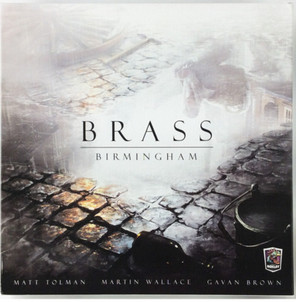
Brass: Birmingham reconstructs the economic transformation of industrial England through a dual-era framework that separates canal and rail periods, each governed by distinct market dynamics and infrastructure investment requirements. Players execute strategic resource management across coal, iron, and cotton industries, where profitability hinges on anticipating supply-demand fluctuations and competitor positioning. The game’s brilliance lies in its interconnected economic systems—building a coal mine serves personal interests while potentially benefiting rivals who need fuel. Network development through canals and railways creates transportation infrastructure that unlocks market access and scoring opportunities. Victory demands adaptive planning as players respond to evolving market conditions and opponent strategies. This mechanical depth has earned Brass: Birmingham recognition as a premier economic simulation, offering players unrestricted strategic pathways within historically-grounded industrial constraints.
The Landlord’s Game: Monopoly Origins
Elizabeth Magie’s 1904 creation The Landlord’s Game embedded economic philosophy directly into gameplay mechanics, establishing a pedagogical framework that weaponized entertainment against monopolistic capitalism. The patented design featured dual rulesets: one demonstrating wealth concentration’s destructive effects, another promoting cooperative land use. This Game Evolution strategically employed Atlantic City properties as tangible anchors for abstract Economic Principles, transforming theoretical inequality into visceral player experience. Players witnessed firsthand how monopolistic accumulation devastated communal prosperity, while alternative rules revealed equitable distribution’s benefits. Magie engineered each mechanical element to expose social injustice, converting the board into an educational battleground against economic tyranny. Her innovation demonstrated that ludic systems could challenge entrenched power structures, proving games transcend mere recreation to become instruments of ideological resistance and social reform advocacy.
Modern Economic Engine Builders
While Magie’s didactic design challenged monopolistic practices through stark contrasts, modern economic engine builders construct intricate mechanical ecosystems where refinement itself becomes the pedagogical vehicle. Titles like Ark Nova and Brass: Birmingham exemplify this evolution, demanding sophisticated resource allocation across interconnected systems. Players construct networks and infrastructure, weighing immediate returns against sustainable growth trajectories. Strategic depth emerges through market manipulation, adaptive pricing mechanisms, and responsive counterplay to opponents’ developing positions.
These designs reject singular win conditions, instead offering multiple viable strategic pathways that reward exploration and mastery. The thematic integration improves mechanical coherence—economic principles materialize through gameplay rather than abstract rules. This approach liberates players to uncover ideal solutions through experimentation, transforming complex economic theory into accessible, engaging decision-spaces where efficiency and foresight determine success.
Economic Mechanics in Party Games
Party games compress economic frameworks into accelerated decision cycles, prioritizing accessibility and social dynamics over the methodical optimization characterizing engine builders. Resource allocation becomes immediate and visceral—players make snap judgments about limited assets rather than executing multi-turn strategies. Market dynamics emerge through simplified trading systems and auction mechanics that encourage player interaction without requiring economic expertise. These games democratize complex principles: supply and demand fluctuate based on collective player choices, creating organic price revelation. Risk-reward calculations happen in real-time, with players weighing opportunistic gains against strategic positioning. The competitive environment rewards adaptability over predetermined planning. By stripping economic concepts to their fundamental mechanics, party games maintain strategic depth while eliminating barriers to entry, allowing players complete freedom to experiment with economic decision-making without overwhelming complexity.