Lovecraftian board games offer distinctive mechanical frameworks beyond Eldritch Horror’s established formula. Each system presents unique action economies, probability curves, and resource management challenges. Players must evaluate variable player powers against scenario-specific win conditions. The genre encompasses a spectrum from strictly cooperative to hidden traitor dynamics, with differing emphases on combat optimization versus narrative development. Decision trees can become complex, requiring careful analysis of contingency paths. The true depth of these cosmic horror experiences awaits further examination.
Key Takeaways
- Arkham Horror series offers similar Lovecraftian themes with cooperative gameplay against cosmic entities and sanity management mechanics.
- Mansions of Madness provides narrative-driven horror with app integration and procedurally generated encounters in haunted locations.
- Cthulhu: Death May Die features modular scenarios with escalating difficulty and sanity deterioration similar to Eldritch Horror.
- Nemesis delivers intense semi-cooperative gameplay with hidden objectives and resource management in a sci-fi horror setting.
- Deep Madness creates systematic tension through interconnected subsystems focusing on mechanical depth within an underwater cosmic horror environment.


Lovecraftian-Inspired Board Games
When examining the subset of tabletop gaming experiences categorized as Lovecraftian-inspired board games, one must first establish the fundamental parameters that define this genre. These games systematically incorporate cosmic horror elements, ancient entities, and sanity management mechanics that mirror H.P. Lovecraft’s literary universe.
- Arkham Horror: The Card Game implements deck-building structures where players navigate eldritch threats while managing dwindling sanity
- Cthulhu: Death May Die offers modular scenarios with escalating difficulty parameters and sanity deterioration effects
- Mansions of Madness integrates digital application assistance to improve narrative immersion within procedurally generated encounters
- Cooperative gameplay functions as the operational framework, requiring strategic resource allocation against overwhelming cosmic forces
These horror board games deliberately cultivate a sense of dread through intricate artwork and thematic components, establishing atmospheric conditions where players confront unwinnable scenarios—mirroring the existential liberation found in acknowledging cosmic insignificance.
Mysterious Puzzle-Solving Adventures
Puzzle-solving mechanisms define a distinct subset of horror-adjacent tabletop experiences that maintain Eldritch Horror’s atmospheric tension while prioritizing deductive reasoning over combat encounters. Games such as Mysterium exemplify cooperative board games where players interpret cryptic visions, necessitating collective analysis of abstract information within strict temporal constraints.
Mansions of Madness (2nd Edition)
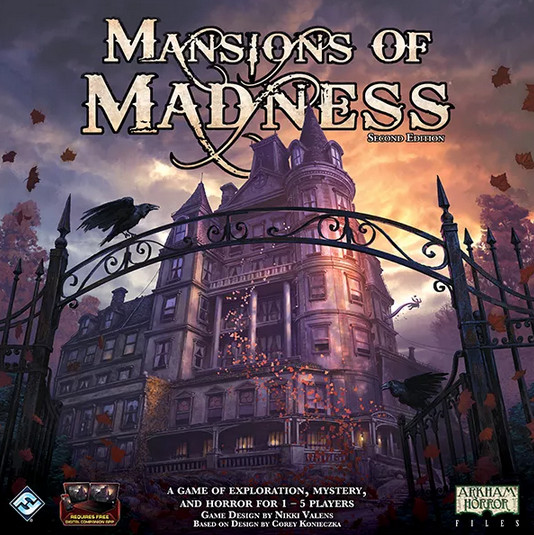
For players seeking more immersive experiences, Mansions of Madness integrates app-driven algorithms with physical components, creating procedurally generated scenarios where players navigate haunted locations. The Night Cage implements tile-placement mechanisms that systematically simulate disappearing pathways, requiring precise resource management of limited light sources. Meanwhile, Vagrantsong’s campaign structure presents sequential challenges against spectral entities, with narrative progression contingent upon successful resolution of each encounter. Escape the Dark Castle offers modular room configurations that guarantee variable scenario construction, enhancing replayability while maintaining accessibility for horror games enthusiasts seeking optimization challenges.
Cthulhu Wars: Cosmic Strategy
Few strategy games capture the epic scale of cosmic horror quite like Cthulhu Wars, which positions itself as a diametric counterpoint to Eldritch Horror’s cooperative framework by implementing competitive area control mechanisms. Players command Lovecraftian factions, each requiring distinct strategic approaches for domination.
| Faction Element | Mechanical Impact | Strategic Consideration |
|---|---|---|
| Great Old Ones | Unique abilities | Power curve timing |
| Cultist placement | Resource acquisition | Area control priorities |
| Faction objectives | Victory point paths | Strategic specialization |
| Monster deployment | Combat effectiveness | Tactical positioning |
The game’s decision tree branches extensively as players must evaluate ideal sequencing for summoning their cosmic entities while simultaneously defending territories. Miniature-driven combat resolution creates tangible tension through calculated risk assessment. With 2-8 player compatibility and extensive replayability through asymmetric faction design, Cthulhu Wars offers freedom of strategic expression within its cosmic horror tableau.
Betrayal at House Hill
Betrayal at House on the Hill (2nd Edition)
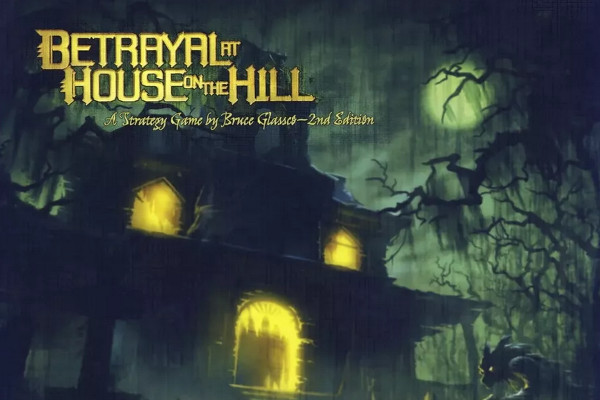
Where Cthulhu Wars encompasses competitive cosmic horror strategy, Betrayal at House on the Hill shifts the framework toward emergent narrative horror with substantial mechanical transformation mid-game. This tile placement game necessitates tactical exploration of a procedurally generated mansion, with players strategically uncovering rooms to maximize attribute advantages before the hidden traitor mechanic activates.
The game’s core strength lies in its modular design architecture—over 50 distinct scenarios activate based on specific trigger conditions, creating exceptional replayability through unpredictable permutations. Each character possesses asymmetrical statistical profiles that determine effectiveness against various supernatural threats, requiring careful selection based on play style preferences.
For players seeking liberation from prescribed narratives, Betrayal’s structural framework delivers systematized chaos—the mansion reconfigures differently each session, ensuring decision trees remain fresh and strategic options unpredictable across multiple playthroughs.
The Night Cage
Unlike Eldritch Horror’s sprawling global mythos, The Night Cage confines tactical horror to an ever-shifting maze where five distinct mechanical systems interact simultaneously. This cooperative board game implements a light-decay mechanic that systematically removes tiles from play, forcing players to optimize movement efficiency or risk permanent isolation.
Players must navigate the maze’s shifting architecture using asymmetric character abilities, creating decision trees that branch exponentially as paths disappear. The tile-placement system operates on carefully balanced probability distributions, with key-collecting serving as the primary progression metric toward escape conditions.
The game’s procedurally generated maze guarantees a highly replayable experience in spite of its confined spatial parameters. With a 45-90 minute runtime and 1-5 player scaling, The Night Cage delivers modular horror that rewards strategic coordination while systematically stripping away options until players either achieve collective victory or face permanent darkness.
Nemesis: Alien Hunting Horror
Nemesis (3rd Printing)
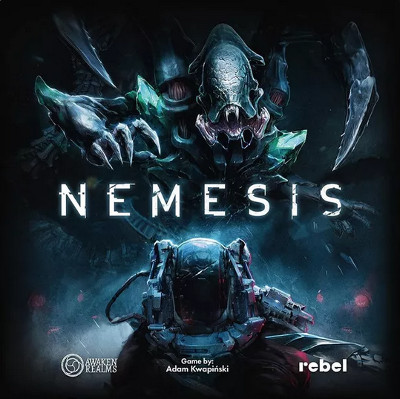
While maintaining a contained environment similar to The Night Cage, Nemesis expands the horror experience through interlocking systems of semi-cooperative gameplay mechanisms. Players navigate a complex decision matrix, balancing personal objectives against collective survival, while the hidden traitor mechanic introduces a psychological dimension of uncertainty during the 90-120 minute runtime.
Nemesis implements granular resource management protocols requiring strategic allocation of limited actions. The alien threat operates on deterministic yet unpredictable pathfinding algorithms, forcing players to constantly recalculate ideal movement patterns. Character asymmetry provides distinct tactical approaches, generating significant replayability through combinatorial permutations of crew abilities, objectives, and randomly generated event sequences.
This modular design philosophy creates a horror ecosystem where success demands both tactical precision and social deduction—a rare synthesis that offers liberation from predictable gameplay patterns while maintaining coherent mechanical integrity.
Deep Madness: Underwater Terror
Deep Madness extends the horror framework from alien spacecraft to claustrophobic underwater environments, creating exponential complexity through its embedded mechanical systems. This cooperative board game implements a modular board design that liberates players from repetitive gameplay, allowing 1-6 participants to construct diverse scenarios with each session.
Players assume specialized roles with distinct ability sets, maneuvering through the research facility’s compartmentalized spaces while strategic resource allocation determines survival probability. The game’s intricate sanity and health management systems mirror Eldritch Horror’s psychological depth, yet with heightened spatial constraints.
The inclusion of detailed miniatures representing Lovecraftian horrors amplifies the immersive atmosphere, creating tangible realizations of cosmic dread. For enthusiasts of thematic horror games seeking mechanical depth, Deep Madness offers systematic tension through its interconnected subsystems, compelling players to constantly reassess tactical priorities amid mounting underwater terror.
Lovecraft’s Arkham Files Series
Arkham Horror (3rd Edition)
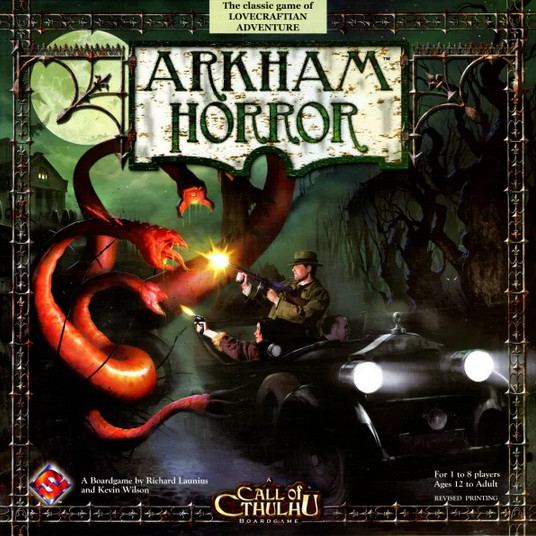
The definitive cornerstone of Lovecraftian tabletop experiences, Fantasy Flight Games’ Arkham Files series constitutes an interconnected ecosystem of games sharing thematic DNA with Eldritch Horror while implementing distinct mechanical frameworks. Within this universe, investigators attempt to thwart cosmic threats through cooperative gameplay requiring precise resource allocation and strategic coordination.
Each iteration—Arkham Horror, Mansions of Madness, and importantly Arkham Horror: The Card Game—presents complex mechanics with modular scenarios ensuring high replayability. Players navigate skill checks while managing sanity as eldritch forces encroach upon reality. The extensive expansion content allows groups to customize difficulty parameters and narrative arcs within Lovecraft’s mythos.
The series excels in translating abstract cosmic dread into concrete decision points, creating tension through mechanical uncertainty rather than merely atmospheric elements—a hallmark of sophisticated design architecture.