Board game enthusiasts seeking alternatives to “Ticket to Ride” will uncover a rich environment of strategic mechanics spanning route optimization, resource management, and competitive territory control. Games like “Catan,” “Power Grid,” and “Carcassonne” employ similar tactical progression systems. Yet certain titles introduce unexpected dimensions—cooperative frameworks, economic complexity, and rapid decision-making—that fundamentally reshape gameplay while maintaining the core engagement factors that make “Ticket to Ride” compelling.


Key Takeaways
- Route-Claiming Mechanics: Carcassonne and New York 1901 offer similar territory control gameplay with competitive route acquisition and strategic positioning.
- Quick Game Sessions: Tsuro delivers rapid 15-20 minute path-racing experiences, ideal for players seeking streamlined alternatives to Ticket to Ride’s 35-45 minute duration.
- Resource Management Focus: Splendor emphasizes engine-building through card acquisition and token management, combining elegance with tactical depth similar to route optimization.
- Area Control Strategy: Takenoko and Sagrada translate route-claiming into accessible dice placement and area control mechanics, maintaining approachable complexity for casual players.
- Negotiation and Trading: Catan rewards strategic trading and resource optimization, featuring dynamic player interactions that mirror negotiation elements found in competitive board games.
Games Similar to Ticket to Ride
Several acclaimed board games capture the strategic essence of Ticket to Ride through distinct mechanical implementations.
Catan demands resource optimization and negotiation, mirroring Catan strategies that reward shrewd trading. Power Grid constructs network-building challenges across dynamic maps, demanding tactical foresight identical to Ticket expansion planning. Sagrada translates route-claiming mechanics into elegant dice placement, where strategic positioning determines victory conditions.

Key alternatives include:
- New York 1901: Territory control gameplay paralleling competitive route acquisition and resource management
- Takenoko: Area control mechanics blended with family-friendly accessibility, maintaining Ticket to Ride’s approachable complexity
- Power Grid: Network expansion requiring systematic resource allocation and infrastructure development


These games preserve the core satisfactions—claiming strategic positions, managing limited resources, and executing long-term plans—while introducing fresh mechanical twists that reward independent decision-making and competitive autonomy.
Carcassonne: Medieval Map Building
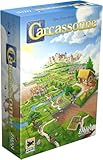
Tile by tile, Carcassonne constructs a dynamic medieval scenery where players incrementally build cities, roads, and fields through strategic placement and meeple allocation. This tile strategy game accommodates 2-5 players in 35-45 minute sessions, making it accessible for both casual and serious gamers.
The area control mechanic parallels Ticket to Ride’s route-building approach, requiring players to claim features with their meeples strategically. Points accumulate upon completing cities, roads, and fields, rewarding tactical foresight and spatial planning.
Carcassonne’s elegant rule set serves as an exemplary gateway game, introducing newcomers to sophisticated board gaming mechanics without overwhelming complexity. Its Spiel des Jahres 2001 recognition validates its design excellence. Numerous expansions extend gameplay depth, offering players unlimited customization and strategic possibilities for continued engagement.
Splendor: Gem Trading Strategy
Engine-building mechanics form the foundation of Splendor, a gem-collecting strategy game where players construct increasingly powerful economic engines through card acquisition and token management. Players begin with basic gem tokens, progressively purchasing cards that yield permanent bonuses, enabling more ambitious turns as their economic engines mature.
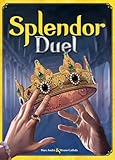
Strategic depth emerges through gem acquisition tactics, where players must balance immediate purchases against long-term card investments. Noble attraction strategies prove similarly critical—acquiring high-value cards magnetizes nobles who deliver substantial point bonuses.
The objective demands collecting 15 points via cards and nobles, with gameplay lasting 30-45 minutes across 2-4 players. Splendor’s elegant simplicity belies its competitive complexity, rewarding players who master resource allocation and timing. Its 2014 Golden Geek award reflects widespread recognition of this engaging, tactically rich experience.
Tsuro: Quick Path Racing
Tsuro strips away the economic complexity of engine-building games, instead offering a streamlined path-racing experience where player interaction centers on tactical positioning rather than resource accumulation. This streamlined design allows players to master the mechanics instantly, focusing energy on pathway strategy and dragon survival instead of learning curves.
The game’s elegant mechanics involve placing tiles to create continuous paths while maneuvering around opponents. Each decision demands foresight—players must anticipate collision points and position their dragons strategically to outlast competitors. The fifteen to twenty-minute playtime respects player autonomy, delivering satisfying gameplay without demanding excessive time investment.
Tsuro’s visual sophistication and accessibility across age groups make it an exceptional addition to any collection, offering genuine tactical depth wrapped in approachable mechanics and rapid-fire social engagement.
Power Grid: Economic Network Building
Economic complexity reaches its zenith in Power Grid, a strategic masterpiece where players construct sprawling metropolitan networks while maneuvering through volatile resource markets and competitive power plant auctions. This 2-6 player experience demands mastery of resource allocation, forcing participants to balance immediate expenditures against long-term infrastructure development. The game’s market dynamics create constant tension—players bid aggressively for power plants while managing fuel costs that fluctuate unpredictably. Similar to Ticket to Ride’s connection mechanics, Power Grid requires players to expand city networks using house tokens, yet adds sophisticated economic layers absent from its predecessor. Approximately 120 minutes of gameplay delivers uncompromising strategic depth, rewarding those who optimize their supply chains and anticipate opponents’ moves. This is economic strategy distilled to its fundamental, unforgiving form.
Pandemic: Cooperative Disease Fighting

While Power Grid pits players against one another in ruthless economic competition, Pandemic inverts this dynamic entirely—transforming the board game experience into a unified struggle against an algorithmic adversary. Players assume specialized roles—Medic, Scientist, and others—each wielding distinct abilities that amplify cooperative gameplay mechanics. The world map interconnects cities where teams strategically navigate, treating infections and constructing research stations through coordinated action. Disease management strategies demand calculated resource allocation and synchronized decision-making across variable difficulty levels. Outbreaks and cascading challenges create dynamic tension, forcing players to prioritize threats systematically. This 45-minute experience accommodates two to four participants seeking liberation from competitive dynamics. Pandemic exemplifies how cooperative frameworks generate strategic depth while cultivating genuine teamwork, distinguishing it fundamentally from Ticket to Ride’s competitive architecture.
Catan: Resource Trading Strategy
Resource scarcity and negotiation form the mechanical backbone of Catan, a strategy game that fundamentally rewires player interaction through dynamic trading systems and probabilistic resource generation. Players accumulate wood, brick, sheep, wheat, and ore by rolling dice on hexagonal resource tiles, creating unpredictable income streams that demand adaptive resource management. The trading mechanic—whether negotiating directly with opponents or leveraging the bank’s standardized 4:1 exchange rate—incentivizes strategic communication and shrewd deal-making. Harbor settlements unlock improved trading ratios, rewarding positional advantage. Strategic planning intensifies as players balance immediate building needs against long-term expansion goals, competing for ideal board locations while managing finite resources. Accommodating 3-4 players across 30-90 minutes, Catan delivers emergent gameplay where economic autonomy and calculated risk-taking determine victory.
Catan: Sheep Trading Strategy
Sheep emerge as the cornerstone commodity in Catan’s trading ecosystem, functioning as the primary currency for settlement construction and development card acquisition. Their strategic importance stems from sheep scarcity relative to demand, creating competitive advantage in negotiations. Savvy players employ sophisticated trading tactics by stockpiling sheep during abundant production phases, then utilizing them during shortage periods to extract favorable exchanges for brick and wheat. This resource manipulation allows players to dictate market dynamics and secure positioning in resource-rich territories. Successful traders recognize sheep as negotiating tools rather than mere building materials, using them to forge advantageous deals that accelerate infrastructure development. Mastering sheep-centered trading tactics separates competitive players from novices, fundamentally determining victory probability through calculated resource control and strategic bartering acumen.