Restaurant-themed board games operate across distinct mechanical frameworks, each leveraging food service as thematic scaffolding for gameplay systems. Sushi Go! employs drafting mechanics, while Throw Throw Burrito introduces physical components. Taco Cat Goat Cheese Pizza prioritizes reflex-based card play. Monopoly: Flavortown extends into territory control. These designs reveal how culinary settings accommodate varied player preferences and engagement styles—but which mechanics actually define the genre’s appeal?
Key Takeaways
- Restaurant-themed board games range from fast-paced card games like Sushi Go Party to strategic titles like Monopoly: Flavortown for diverse player preferences.
- Games like Dish Em Out combine competitive cooking mechanics with resource management, requiring players to balance strategy and tactical decision-making throughout gameplay.
- Culinary-themed games span multiple mechanics including drafting, real-time reflexes, and engine-building, offering accessibility across different skill levels and gaming environments.
- Play styles vary from quick 10-15 minute matches in Throw Throw Burrito to longer strategic experiences in property-acquisition games like Monopoly: Flavortown.
- Restaurant-themed games integrate culinary mechanics and thematic elements to create engaging experiences that appeal to players interested in the food industry.


Food-Themed Board Games Ranked
Because food-themed board games span diverse mechanics and player counts, they offer distinct experiences suited to different gaming preferences. These titles showcase culinary creativity through varied gameplay systems:
- Sushi Go Party delivers fast-paced drafting for 2-8 players, emphasizing ideal combination-building around $20
- Dish em Out features competitive cooking where 2-5 players manage orders and inventory in 30-minute rounds
- Point Salad employs open drafting mechanics enabling multiple scoring strategies within single gameplay
- Throw Throw Burrito merges card matching with physical dodgeball mechanics for 2-6 players
- Homebrewers utilizes engine-building systems for creative brewing strategies and production management
Each game presents distinct mechanical depth, from turn-based strategic planning to real-time physical engagement. Component design varies significantly, ranging from card decks to soft projectiles, accommodating different player preferences and gaming environments while maintaining accessibility across skill levels.
Sushi Go! Drafting Mechanics

Employs a simultaneous selection drafting system where players choose a single card from their hand each round, then pass remaining cards clockwise to the next player. This mechanic creates dynamic drafting strategy as participants balance personal collection goals against blocking opponents’ potential combinations.
Each card type—nigiri, rolls, and specialty dishes—represents distinct point values and set-completion opportunities. Card synergy becomes vital; certain combinations unlock bonus points, rewarding thoughtful selection sequences. The system’s elegance lies in its constraints: limited choices force meaningful decisions within seconds, preventing analysis paralysis while maintaining strategic depth.
Special power cards inject tactical unpredictability, occasionally disrupting established strategies and shifting turn order advantages. Players must adapt plans responsively as card availability shifts with each passing hand, ensuring no two rounds play similarly.
Throw Throw Burrito: Physical Combat
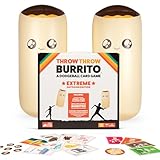
Throw Throw Burrito disrupts traditional card-game conventions by integrating soft plastic burritos as interactive components alongside standard card-matching mechanics. During designated “Burrito Duel” rounds, players transition from strategic card collection to physical engagement, throwing plush projectiles at opponents to disrupt their scoring attempts. This hybrid approach generates burrito battles that enhance the game beyond passive card play.
The chaotic gameplay emerges from simultaneous card-matching and projectile combat, forcing participants to balance offensive throws with defensive dodging. Players aged 2-6 navigate 15-20 minute sessions where physical participation directly influences outcomes. At approximately $40 retail price, the game delivers accessible entertainment combining tactical decision-making with kinetic activity, appealing to groups seeking interactive engagement beyond conventional board gaming experiences.
Taco Cat Goat Cheese Pizza: Reflex-Based Chaos

Taco Cat Goat Cheese Pizza strips card games to their mechanical essence—a reflex-based elimination system where players rapidly shed their hands by slapping a central discard pile at precise moments. The slap mechanics form the core gameplay loop: players cycle through turns playing cards while chanting the titular phrase, triggering slaps when matching patterns emerge. Designed for 2-8 competitors, the game distills decision-making into pure reaction time and pattern recognition.
Its chaotic fun derives from unpredictable card sequences and contested slap claims, demanding sharp attention in spite of simple rules accessible to ages 8 and up. With 10-15 minute matches, Taco Cat Goat Cheese Pizza prioritizes rapid engagement over lengthy downtime. The whimsical artwork and absurdist theme amplify its appeal, delivering consistent entertainment through mechanical elegance and competitive spontaneity rather than strategic depth.
Monopoly: Flavortown: Long-Form Strategy

Monopoly: Flavortown transposes the acquisition-and-accumulation framework of classical Monopoly onto a culinary-themed board populated by properties derived from Guy Fieri’s restaurant empire. The gameplay mechanics retain the core loop of purchasing properties, collecting rent, and strategically managing resources while advancing toward financial dominance. Unique tokens—including a cheeseburger and Camaro—provide thematic differentiation during play.
Strategic depth emerges through property monopolization and calculated investment decisions. Strategy tips emphasize securing high-value color sets early and leveraging food-themed challenge cards for competitive advantage. Special spaces introduce culinary-inspired opportunities that reward tactical positioning. Designed for 2-6 players across 60-120 minutes, Flavortown demands long-form commitment, rewarding those who balance aggressive acquisition with fiscal prudence and negotiation acumen.
Anarchy Pancakes: Cooperative Mayhem

Where Flavortown demands methodical property acquisition across extended sessions, Anarchy Pancakes welcomes controlled chaos through rapid card-play cycles. This fast-paced card game designed for 2-5 players emphasizes spontaneous creativity over calculated strategy. Players construct wild pancake and topping combinations, generating chaotic interactions that define the experience. The mechanical simplicity—straightforward rules enabling quick gameplay—makes it accessible to newcomers while maintaining engagement for veterans seeking lively competition. Component design encourages loud participation, culminating in players collectively yelling “Anarchy Pancakes!” at round completion. Strategy and spontaneity interweave throughout play, creating unpredictable outcomes. Priced affordably at $13, the game delivers excellent value for casual gatherings where laughter and friendly competition matter more than protracted deliberation. The result: an ideal choice for groups prioritizing entertainment freedom over competitive intensity.
Sriracha: The Game: Speed
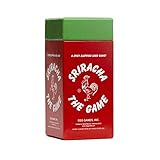

Sriracha: The Game accelerates the pace even further, condensing restaurant-themed gameplay into a 10-to-15-minute sprint of card-slapping reactions. Designed for 3 to 8 players, this fast-paced title demands sharp reflexes and quick decision-making. Mechanics center on speed reflexes, requiring players to match food item cards to corresponding actions through rapid card matching. Players compete to eliminate their entire hand first, creating competitive momentum throughout each round.
The game’s component design improves gameplay significantly. Cute illustrations paired with sriracha-inspired packaging create visual cohesion while maintaining functional clarity for quick card identification. Simple ruleset accessibility guarantees players of any age grasp mechanics immediately, eliminating learning friction. The combination of straightforward rules and intense reaction-based gameplay generates sustained engagement, making Sriracha: The Game an efficient option for groups seeking restaurant-themed entertainment without substantial time investment.
Dish Em Out: Restaurant Management
While Sriracha: The Game prioritizes reflexive speed, Dish Em Out shifts focus toward deliberate strategy and resource management across 30 minutes of gameplay. Designed for 2-5 players aged 8 and up, this diner-ownership simulator demands tactical planning around simultaneous cooking mechanics and customer order fulfillment.
Players navigate the core tension between accumulating food tiles and managing their inevitable discard into the Trash column. Success hinges on accurate order completion—fulfilling customer orders generates points while errors trigger penalties, incentivizing calculated decision-making. The spatial reasoning required to optimize tile placement and timing creates meaningful strategic depth.
Dish Em Out cultivates critical thinking through mechanics that reward foresight and punish waste. Its resource-management framework challenges players to balance aggressive accumulation against conservative restraint, establishing itself as a cerebral alternative within restaurant-themed gaming.