King Arthur-themed board games occupy a fascinating mechanical space where Arthurian mythology intersects with strategic gameplay systems. From Britannia’s territory control mechanics to Shadows over Camelot’s semi-cooperative traitor dynamics, these titles employ distinct rule sets to capture Camelot’s legendary atmosphere. Each game interprets the source material differently through its mechanical framework. The question remains: which design philosophy most effectively translates myth into engaging tabletop experience?
Key Takeaways
- Arthurian legend games range from streamlined card games like Camelot Legends to complex territorial conquest simulations like Excalibur.
- Shadows over Camelot features semi-cooperative gameplay where knights complete quests while battling siege engines and potential traitors.
- Britannia covers medieval British history including post-Arthurian periods with multiple factions competing for territorial control across centuries.
- Games vary in complexity from casual 60-minute card games to strategic 10-year territorial management with combat and economy systems.
- King Arthur themes accommodate 2–7 players with mechanics emphasizing faction-building, quest completion, territorial dominance, and mythic fantasy storytelling.
Artus (2011)
Artus (2011)
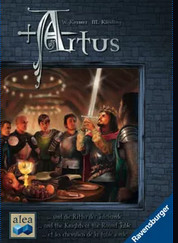
Elegance defines Artus, a 2011 design by Michael Kiesling and Wolfgang Kramer that transforms the legend of Camelot into a rotating-turntable economy. The round table functions as a dynamic scoring mechanism, with spaces valued from +10 to -15 that shift position whenever a new king claims power—a mechanical realization of political upheaval.
Players command six cards: two knights, two royalty, two scoring cards. Each turn demands two card plays, orchestrating figure placement around the table, area control, and ring manipulation. The figure bearing three rings becomes king, forcing the entire board’s reorientation.
Across eleven rounds, players accumulate points through strategic positioning and tactical card sequencing. Supporting two rule systems—basic and professional—Artus accommodates both casual engagement and competitive depth, delivering mechanically sophisticated Arthur-ian drama within sixty minutes.
Britannia (1986)
While Artus distills Arthurian legend into elegant mechanical abstraction, Britannia (1986) sprawls across a thousand years of actual history, tasking players with commanding successive waves of invaders and settlers across the British Isles from 43 A.D. to 1066. The game’s design enforces historical plausibility through rule constraints while preserving player agency to reshape outcomes. Romans, Saxons, Angles, Picts, Norsemen, and Scots clash across centuries in a system rewarding strategic mastery. Players navigate counterfactual possibilities: could Boudicca’s Revolt topple Roman occupation? Could Romano-British forces repel Saxon invasions? Could William’s death alter the Norman conquest? Britannia transforms historical documentation into competitive gaming where consequence flows from player choice, granting participants dominion over kingdoms and civilizations.
Camelot Legends (2004)
Camelot Legends (2004) pivots from Britannia’s historical scope toward pure mythic fantasy, distilling Arthurian legend into a streamlined card game where players command knight factions across three thematic locations—Camelot, Cornwall, and the Perilous Forest. This non-collectible card game accommodates 2-4 players in approximately 60 minutes, making it accessible yet strategically engaging for ages 10 and up. The 100-card deck features artwork from renowned illustrators including Ed Beard Jr. and Donato Giancola, elevating visual presentation. Gameplay centers on faction-building and quest completion, with rival knights confronting escalating challenges at each location. Victory belongs to those whose knights accomplish the most difficult tasks, rewarding strategic foresight and tactical execution over luck or resource accumulation.
Shadows over Camelot (2005)
Shadows Over Camelot
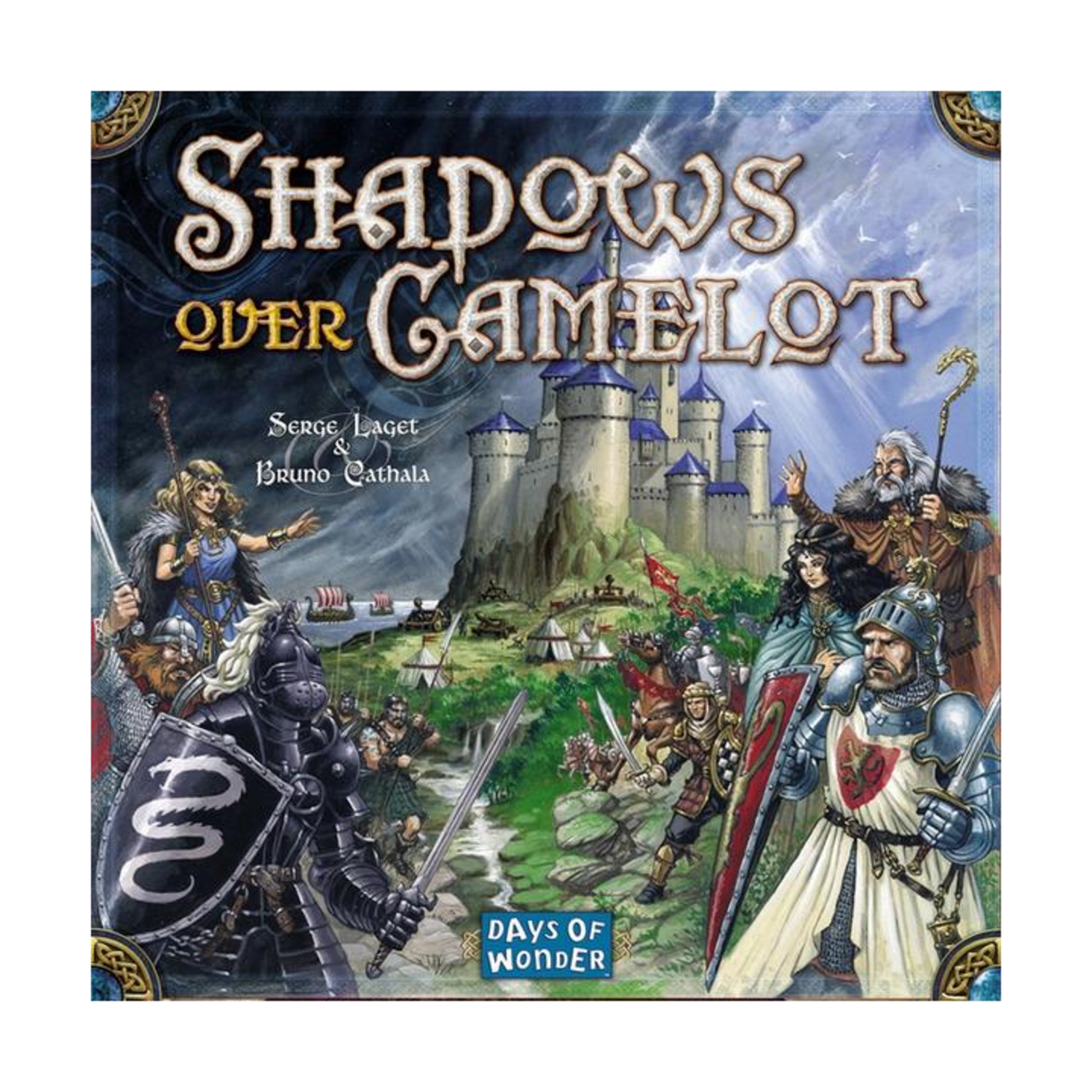
A shift toward collaborative gameplay defines Shadows over Camelot, a semi-cooperative deduction game accommodating 3–7 players as knights of the Round Table. Players navigate mechanically distinct turn structures balancing heroic actions against mandatory evil choices, forcing strategic sacrifice for incremental progress.
The victory condition hinges on establishing white sword majority before siege engines topple Camelot’s defenses:
- Completed quests generate white swords; failed quests spawn black swords and siege mechanisms
- Each turn demands action selection: quest advancement, hand replenishment, or card deployment against evil forces
- One knight may harbor traitor status, operating covert sabotage against the collective objective
This asymmetric information layer injects genuine tension. Players must deduce loyalty while managing resource constraints and competing priorities. The traitor mechanic transforms cooperative play into psychological warfare, demanding players interrogate motivations and scrutinize decisions against potential hidden agendas.
Excalibur (1989)
Excalibur represents a dramatic departure from narrative-driven Arthurian quests, instead foregrounding territorial conquest and economic management across a ten-year campaign. Players command knights competing to control twenty-one of forty fiefs through simultaneous or secret movement phases across spring, summer, autumn, and winter seasons. Combat strengthens through mercenary recruitment and knight experience, while economic expansion demands strategic infrastructure: beehives, fisheries, forests, castles, and mills sustain territorial holdings. Winter’s restructuring phase permits salary payments, troop hiring, and construction before randomized events—plague, floods, robber barons—reshape the valley. Victory emerges through territorial dominance or accumulated honor. Optional mechanics introduce religious commitment, weather effects, and troop loyalty, elevating complexity. Excalibur prioritizes emergent strategic freedom over scripted narrative, demanding players navigate interconnected systems of conquest, logistics, and resource allocation.