Board games similar to Talisman share core mechanics that define the adventure gaming genre. These titles typically feature modular boards, character progression systems, and encounter-driven gameplay loops. Players navigate spaces through dice movement or card-based mechanics while collecting items, gaining experience, and facing randomized challenges. The strategic depth varies significantly between implementations, with some emphasizing tactical combat while others prioritize resource management or cooperative elements. Understanding these mechanical differences becomes essential when selecting which variant best suits specific gaming preferences.
Key Takeaways
- Runebound offers modular adventure cards, hero selection, and multiple victory paths through combat, diplomacy, and strategic exploration.
- Mage Knight combines deck-building with character advancement, featuring solo campaigns and tactical decision-making for long-term strategy.
- Prophecy: Dragon Realm Adventures uses modular boards, asymmetric character classes, and quest-driven narratives with transformation mechanics.
- Champions of Midgard integrates Norse mythology with worker placement and dice-based combat requiring tactical resource management.
- Eldritch Horror emphasizes collaborative gameplay, risk assessment, and dice pool mechanics while racing against doom thresholds.
What Makes Talisman a Beloved Fantasy Adventure Game
While many fantasy board games rely on complex resource management or intricate combat systems, Talisman distinguishes itself through its elegant fusion of roll-and-move mechanics with strategic decision layers that create meaningful player agency. The three-region board structure forces tactical navigation choices, while Fate Tokens provide controlled mitigation against random outcomes. This fantasy board game enhances traditional mechanics through permanent consequence systems, where character death carries genuine weight and eliminates players from contention.
Dynamic player interaction mechanisms encourage both confrontational gameplay and strategic alliances, creating emergent social dynamics that shift throughout sessions. The character class system and collectible item progression offer customization paths that influence tactical approaches. These interconnected systems generate variable gameplay experiences where mechanical simplicity masks deeper strategic considerations, appealing to players seeking accessible yet consequential adventure gaming.
Runebound: Epic Quests in a Magical Realm
Runebound (2nd Edition)
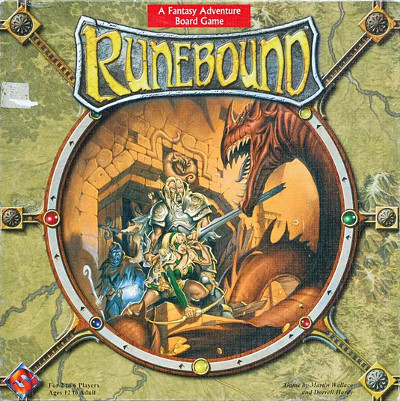
Through its modular adventure card system and hero progression mechanics, Runebound establishes a quest-driven framework that prioritizes strategic exploration over traditional roll-and-move navigation. Players select from diverse heroes possessing unique abilities, creating tactical advantages through character specialization rather than relying on dice luck. The modular board generates varied encounter paths, ensuring each session offers distinct strategic possibilities and exploration routes.
Combat, diplomacy, and exploration mechanics provide multiple victory pathways, accommodating different strategic preferences within a single game system. Hero advancement occurs through skill upgrades and equipment acquisition, rewarding tactical decision-making over random chance. The narrative-driven quest structure incorporates both cooperative challenges and competitive objectives, allowing players to choose their engagement level. Among games similar to Talisman, Runebound distinguishes itself through strategic depth and player agency, offering freedom from restrictive movement mechanics while maintaining fantasy adventure atmosphere.
Mage Knight: Strategic Combat Meets RPG Elements
Mage Knight Board Game by WizKids
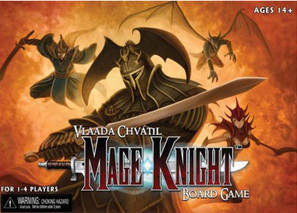
Mage Knight distinguishes itself through its sophisticated deck-building system where players construct and refine their action decks throughout the campaign, creating synergistic combinations of movement, combat, and magical abilities. The game’s solo campaign mode operates through an extensive ruleset that governs enemy AI behavior, objective progression, and world state changes without requiring human opponents. These mechanical frameworks allow players to execute complex tactical decisions across multiple interconnected systems while maintaining consistent challenge scaling throughout extended play sessions.
Deck Building Mechanics
Several board games improve deck-building mechanics beyond simple card acquisition, but few integrate them as seamlessly with tactical combat and character progression as Mage Knight. Players begin with identical starter decks and expand their capabilities by strategically selecting cards from a shared market. Each acquired card represents spells, units, or abilities that permanently improve the player’s tactical options. The deck building mechanics operate on a unique dual-currency system where players must balance immediate tactical needs against long-term deck optimization. Cards provide multiple activation options, creating meaningful decisions about resource allocation and timing. This system rewards players who understand synergistic card combinations while maintaining tactical flexibility. The evolving deck mirrors character advancement, transforming weak starting capabilities into specialized powerhouses through deliberate strategic choices.
Solo Campaign Mode
How does a board game successfully merge complex strategic combat with meaningful character progression across multiple sessions? Mage Knight delivers through its robust solo campaign mode, presenting interconnected scenarios that build upon previous achievements while maintaining tactical depth. Each scenario functions as a strategic puzzle requiring specific objectives and resource management decisions that carry forward through the campaign arc. Players navigate modular terrain while making calculated combat choices that directly influence character development trajectories. The solo campaign mode eliminates external dependencies, granting complete autonomy over pacing and strategic experimentation. Scenario progression unlocks advanced abilities and equipment options, creating meaningful long-term consequences for tactical decisions. This structure transforms isolated gaming sessions into unified strategic narratives where every choice compounds across the entire campaign experience.
Prophecy: Dragon Realm Adventures and Character Development
While Talisman relies on linear progression through regions, Prophecy: Dragon Realm Adventures implements a modular board system that creates variable dungeon layouts and encounter configurations each session. Players select from distinct character classes featuring asymmetric abilities and tactical specializations, enabling diverse strategic approaches rather than homogenized progression paths. The quest-driven narrative structure directly influences character development mechanics, where accumulated items and abilities compound tactical options throughout gameplay. Unlike traditional elimination formats, character death triggers transformation mechanics that maintain player agency and strategic influence over game outcomes. This design philosophy preserves individual autonomy while preventing premature exclusion from meaningful decision-making. The modular architecture guarantees each session presents unique tactical challenges, requiring adaptive strategies rather than memorized ideal paths, thereby maximizing long-term replayability and strategic depth.
Heroquest: Dungeon Crawling With Tactical Gameplay
HeroQuest (1st Edition)
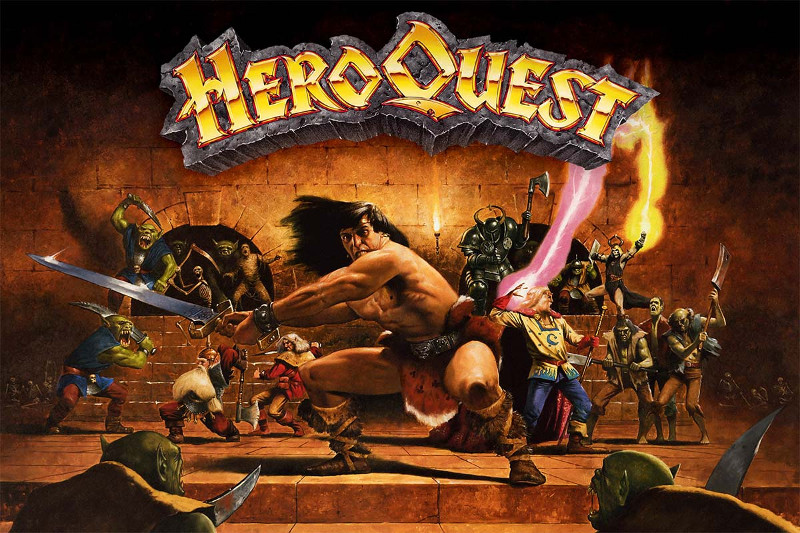
Unlike Talisman’s race-based progression system, Heroquest establishes asymmetric character classes through distinct statistical distributions and equipment restrictions that fundamentally alter tactical approaches to dungeon exploration. This fantasy adventure board game employs modular board configurations that eliminate predetermined paths, forcing players to adapt positioning strategies based on variable dungeon layouts. Each character class operates within specific mechanical constraints—spell limitations, armor restrictions, combat modifiers—creating interdependent tactical relationships crucial for quest completion. The Evil Wizard role introduces dynamic opposition management, controlling enemy placement and narrative progression without predetermined scripting. Combat resolution utilizes streamlined dice mechanics that prioritize quick decision-making over complex calculations. Character advancement occurs through equipment acquisition rather than statistical inflation, maintaining tactical balance while providing meaningful progression incentives that encourage repeated play sessions.
Descent: Journeys in the Dark for Cooperative Adventures
Most cooperative dungeon-crawling experiences establish asymmetric power dynamics through dedicated adversarial roles, and Descent: Journeys in the Dark exemplifies this design philosophy by positioning one player as the Overlord who commands enemy forces against a party of heroic adventurers. The modular board system generates tactical flexibility through variable scenario configurations, while distinct hero classes provide specialized mechanical frameworks for strategic optimization. Campaign progression mechanics facilitate character development across multiple sessions, creating persistent narrative consequences that influence subsequent tactical decisions. The Overlord’s trap deployment and monster activation systems counter traditional cooperative gameplay patterns, forcing heroes to adapt their strategic approaches dynamically. This asymmetric structure delivers mechanically-driven tension without restrictive predetermined outcomes, allowing players complete freedom to develop their preferred tactical methodologies while traversing interconnected dungeon environments filled with objective-based challenges.
Relic: Space-Themed Adventure in the Warhammer Universe
Relic transplants Talisman’s circular board progression and dice-driven movement into the grimdark Warhammer 40,000 universe, maintaining the core roll-to-move mechanics while introducing space combat encounters and faction-specific objectives. The game preserves Talisman’s three-tier board structure with outer, middle, and inner regions, but replaces fantasy elements with bolt weapons, psychic powers, and corruption mechanics that reflect the source material’s themes. Players navigate identical victory conditions through character advancement and artifact collection, though the 40K setting introduces unique mechanics like threat tokens and location-specific combat modifiers that differentiate tactical decision-making from the original formula.
Warhammer 40K Setting
When players seek Talisman’s adventure mechanics within a grimdark science fiction framework, Relic delivers a mechanically refined experience through its Warhammer 40K setting. The thematic integration transforms familiar exploration patterns into Imperial sectors teeming with heretical threats and xenos encounters.
| Faction Elements | Mechanical Integration |
|---|---|
| Space Marines, Chaos, Eldar | Character-specific abilities and weaknesses |
| Imperial Guard, Ork Clans | Faction-based equipment and spells |
| Tyranids, Tau Empire | Enemy archetypes with unique combat patterns |
The modular board structure maintains Talisman’s accessibility while incorporating quest-driven progression systems. Players navigate between cooperative mission objectives and competitive resource acquisition, creating strategic tension absent from traditional games like Talisman. Character advancement through experience points and specialized equipment reflects the universe’s technological complexity, demanding tactical resource management over pure dice-rolling fortune.
Space Combat Mechanics
Beyond terrestrial faction conflicts, Relic’s combat system distinguishes itself through specialized space engagement protocols that merge positioning mechanics with tactical resource allocation. Players command vessels through sector-based movement while managing finite resources to execute combat maneuvers effectively.
The space combat framework operates through three core mechanics:
- Strategic Positioning: Ship placement determines attack vectors and defensive capabilities across modular board sectors
- Resource Management: Combat effectiveness scales with accumulated equipment, weapons, and energy reserves
- Persistent Engagement: Character death mechanics prevent player elimination, maintaining continuous participation throughout extended campaigns
Unlike Talisman Digital’s streamlined approach, Relic emphasizes multi-layered decision trees where positioning choices cascade into resource allocation consequences. Players must balance aggressive expansion against defensive consolidation while maneuvering through galactic threats. The modular board ensures tactical variety across sessions, preventing repetitive engagement patterns while maintaining strategic depth.
Talisman Structure Similarities
Although Relic transposes Talisman’s fundamental mechanics into the Warhammer 40,000 universe, the structural parallels reveal systematic design continuities that preserve core gameplay loops while accommodating thematic modifications.
The modular board configuration mirrors Talisman’s three-region structure, establishing distinct zones with escalating challenge levels. Players traverse outer sectors before accessing inner domains, maintaining the progression bottleneck that defines strategic pacing. Character advancement systems replicate Talisman’s stat improvement mechanics through collectible equipment and upgrades, enabling customizable power scaling.
PvP combat encounters preserve player-versus-player dynamics crucial to competitive gameplay, while the climactic end-boss confrontation maintains Talisman’s ultimate objective framework. These structural elements demonstrate how established mechanical foundations can support diverse thematic implementations without compromising strategic depth or player agency within the adventure format.
Arkham Horror: Investigative Adventures With Supernatural Themes
Arkham Horror (3rd Edition)
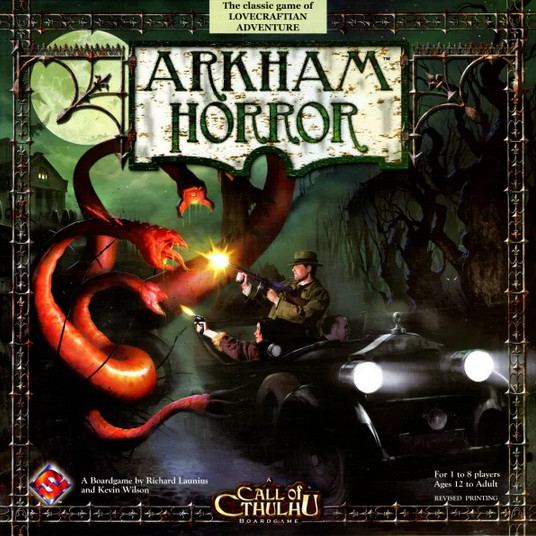
Arkham Horror transforms the adventure-exploration framework into a cooperative experience where investigators must systematically close otherworldly gates before an Ancient One awakens. Players navigate Arkham’s shifting locations, gathering clues and confronting Lovecraftian horrors through tactical decision-making rather than random chance alone.
The game distinguishes itself through several key mechanics:
- Character specialization – Eight unique investigators offer distinct abilities and strategic approaches to problem-solving
- Dynamic narrative events – Branching storylines create meaningful consequences that reshape gameplay conditions
- Modular board design – Gate locations and monster spawns guarantee no two sessions follow identical patterns
Strategic depth emerges from resource management, risk assessment, and coordinated team actions. Players must balance individual character development against collective objectives while managing sanity and stamina costs. The multi-layered challenge system rewards careful planning over impulsive exploration, creating tension through informed choice rather than arbitrary fate.
Mansions of Madness: Story-Driven Exploration and Mystery
Mansions of Madness (2nd Edition)
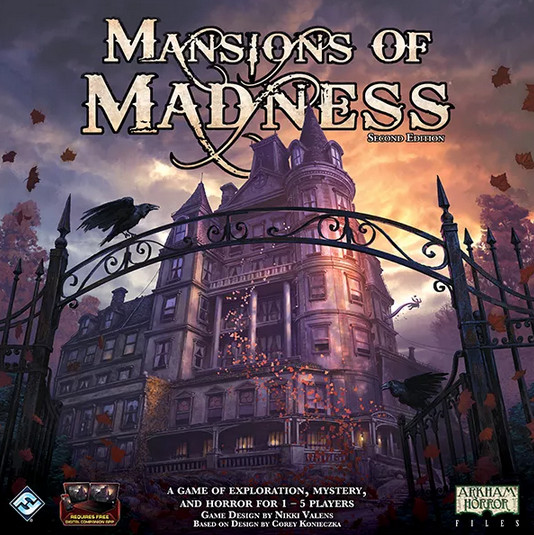
Multiple investigators converge within digital-physical hybrid scenarios where app-driven storytelling orchestrates dynamic horror experiences through procedurally-managed encounters. Each investigator deploys unique mechanical abilities across modular mansion layouts, optimizing cooperative resource allocation while pursuing objective-based victory conditions. The integrated application functions as automated gamemaster, eliminating player-versus-player dynamics while maintaining narrative autonomy through branching scenario paths.
Strategic decision-making emerges through clue revelation mechanics, puzzle-solving sequences, and monster engagement protocols. Players maintain tactical flexibility through inventory management, skill checks, and positioning optimization across interconnected room tiles. Story-driven scenarios utilize Lovecraftian horror elements, creating atmospheric tension through randomized event triggers and escalating threat levels.
Modular scenario architecture guarantees variable replay experiences, with investigators adapting strategies based on revealed map configurations and emerging narrative complications. Victory requires balancing exploration efficiency against mounting horror accumulation.
Eldritch Horror: Global Adventures Against Ancient Evils
Eight investigators traverse a worldwide theater of operations where Ancient Ones threaten dimensional stability through escalating doom accumulation and spawning horror mechanics. Players coordinate resource allocation and investigator positioning across global locations, executing strategic movement patterns to complete mysteries before catastrophic awakening conditions trigger. Each investigator possesses asymmetric abilities requiring tactical deployment optimization.
The cooperative framework demands careful risk assessment:
- Mystery Resolution Timing – Balancing clue gathering efficiency against mounting doom thresholds
- Resource Distribution Networks – Managing assets, spells, and items across dispersed team members
- Encounter Probability Management – Calculating movement risks versus objective completion requirements
Skill test mechanics utilize dice pools modified by investigator statistics and equipment bonuses. Expansion content introduces additional Ancient Ones with unique mechanics, creating variable win conditions and strategic considerations. Unlike linear progression games, Eldritch Horror emphasizes collaborative decision-making autonomy and emergent tactical solutions.
Champions of Midgard: Norse Mythology Meets Worker Placement
Champions of Midgard integrates Norse mythological elements with worker placement mechanics, creating a hybrid system where players assign meeples to action spaces while using dice-based combat resolution. The game’s worker placement framework governs resource acquisition and warrior recruitment, while the thematic layer channels players through monster encounters and exploration missions rooted in Viking lore. This mechanical fusion distinguishes it from pure adventure games by requiring players to balance placement efficiency with combat probability management across multiple turn phases.
Norse Mythological Theme
Several board games successfully merge thematic elements with strategic mechanics, and Champions of Midgard exemplifies this fusion by integrating Norse mythology into a worker placement framework that demands tactical resource management and calculated risk assessment.
The fantasy setting saturates every mechanical decision, as players command Viking warriors represented by dice in combat encounters against mythological creatures. This thematic integration creates meaningful choices where resource allocation directly impacts battle outcomes.
Key strategic elements include:
- Dice-based combat system requiring probability assessment when engaging trolls and dragons
- Worker placement optimization across marketplace and longship locations for maximum efficiency
- Risk-reward calculations balancing resource investment against potential monster defeat rewards
The Dark Mountains expansion amplifies these mechanics through additional monsters and challenges, deepening the strategic depth while maintaining the Norse mythological framework that drives player engagement and decision-making processes.
Worker Placement Mechanics
Multiple worker placement locations in Champions of Midgard create distinct resource acquisition pathways that directly influence combat preparedness and strategic positioning. Players deploy workers across specialized locations to secure food, wood, and gold—each resource serving specific tactical purposes within the game’s economic framework. The worker placement mechanics operate through turn-based allocation, where positioning determines access to critical supplies and warrior recruitment opportunities.
Strategic timing becomes paramount as players balance immediate resource needs against long-term combat objectives. Limited worker availability forces decisive choices between resource gathering and quest preparation. The system rewards efficient placement patterns that maximize resource output while maintaining flexibility for opportunistic moves. These worker placement mechanics seamlessly integrate with the dice combat system, creating interconnected decision trees that define successful Viking clan management and territorial expansion strategies.
Digital Alternatives and Modern Adaptations
While traditional board games require physical components and face-to-face interaction, digital adaptations of Talisman preserve the core mechanics while introducing better accessibility and gameplay refinements. These digital alternatives to Talisman eliminate setup constraints and expand multiplayer possibilities beyond geographical limitations.
Talisman: Digital Edition faithfully recreates the Revised 4th Edition ruleset, supporting online and local multiplayer for up to six players. Talisman: Origins diverges by introducing original storylines and mechanics focused on single-player campaigns.
Beyond direct adaptations, mechanically similar games offer enriched experiences:
- Card Hunter merges deck-building with tactical combat mechanics
- Across the Obelisk modernizes fantasy board game systems through cooperative deck-building
- Steam and mobile platforms provide customizable house rules with production quality improvements
These adaptations maintain strategic depth while offering rule customization freedom unavailable in physical editions.