Cyberpunk board games blend asymmetrical mechanics with thematic depth, positioning players as hackers, corporate agents, or street operatives traversing neon-soaked dystopias. Games like Android: Netrunner employ resource management and deck-building, while titles such as Shadowrun integrate magic systems within technological frameworks. Each demands strategic positioning and psychological maneuvering. The genre’s mechanical complexity raises a critical question: which systems best capture the genre’s essence of corporate infiltration and survival?
Key Takeaways
- Cyberpunk 2077: Gangs of Night City features 90-120 minute campaigns with intense combat mechanics and asymmetrical gang abilities for 1-4 players.
- Android: Netrunner delivers asymmetrical gameplay between hackers and corporations with strategic deck-building and psychological warfare in 45-90 minutes.
- Burncycle combines chip-based actions with tactical complexity as players infiltrate mega-corporations as bots in 60-120 minute sessions.
- Shadowrun: Crossfire blends cooperative deck-building with persistent character leveling, emphasizing teamwork and immersive narratives across quick 30-60 minute games.
- Cyberpunk board games emphasize deception, trust management, and multiple victory pathways, encouraging diverse strategies and high replayability through varied player choices.


Top Cyberpunk Board Games
The scenery of cyberpunk board gaming offers mechanically sophisticated experiences that blend tactical depth with thematic immersion. Several standout titles exemplify this fusion:
- Cyberpunk 2077: Gangs of Night City delivers 90-120 minute campaigns for 1-4 players, emphasizing risky missions and intense combat mechanics that capture the universe’s essence.
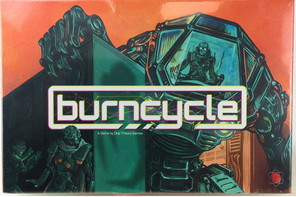
- Burncycle features a unique chip-based action system where players infiltrate mega-corporations as bots, supporting 60-120 minute sessions with tactical complexity.
- Tamashii: Chronicle of Ascend employs modular world design with branching storylines, enabling quick setup and consequential player choices across 60-90 minutes.
- Shadowrun: Crossfire integrates cooperative deck-building with persistent character leveling, emphasizing teamwork across 30-60 minute engagements.
Each game demands strategic gameplay and immersive storytelling, allowing players autonomy in steering moral choices and alliances vital to cyberpunk narratives.
Burncycle by Chip Theory Games
Android: Netrunner Details
Among competitive cyberpunk card games, Android: Netrunner stands apart through its asymmetrical design, pitting a Runner (hacker) against a Corporation in a high-stakes battle of deception and strategy. Released in 2012, the game demands rigorous strategy analysis and sophisticated deck building from both players. The Corporation constructs defensive ice networks and pursues hidden agendas, while the Runner executes tactical hacks against fortified servers. Players navigate 45-90 minute encounters filled with calculated bluffing and psychological warfare. Each faction operates under fundamentally different win conditions, forcing players to master distinct mechanical frameworks. The asymmetrical structure eliminates predictable gameplay patterns, demanding genuine adaptation and creative tactical solutions from competitors seeking genuine strategic freedom.
Netrunner: Asymmetrical Hacker Duels
Asymmetrical roles form the foundation of Netrunner’s strategic depth, with one player commanding a Corporation while the opponent pilots a Runner hacker. This fundamental design creates distinct mechanical frameworks where Runner strategies focus on breaching servers and stealing data through calculated infiltration, while Corporation defenses employ ICE, upgrades, and operations to fortify assets. The gameplay unfolds as a psychological chess match, with Runners managing limited resources and click economy to execute runs, and Corporations deciding which servers warrant protection. Deck customization amplifies asymmetry, enabling each faction to pursue specialized approaches. The resulting mind games demand tactical foresight, bluffing, and adaptation. Players navigate incomplete information environments where calculated risks determine victor or vanquished—embodying cyberpunk’s essence of rebellion against overwhelming institutional power.
Cyberpunk 2020: Dystopian Tabletop RPG
Cyberpunk 2020, created by Mike Pondsmith and first published in 1988, established itself as a foundational tabletop RPG by synthesizing dystopian worldbuilding with mechanically sophisticated character progression. The character creation system grants players agency through diverse roles—Netrunners, Solos, Techs, and Medias—each equipped with distinct abilities and customization pathways. Gameplay mechanics emphasize skill checks and dynamic combat resolution, demanding tactical precision. Moral ambiguity infiltrates every decision; survival frequently demands ethical compromises within corporate-dominated terrains. The system rewards streetwise cunning and calculated risk-taking, empowering players to forge unconventional paths through hostile surroundings.
| Role | Primary Stat Focus | Core Ability |
|---|---|---|
| Netrunner | Intelligence | System Infiltration |
| Solo | Reflexes | Combat Dominance |
| Tech | Technical Ability | Hardware Mastery |
| Media | Charisma | Information Control |
| Fixer | Intelligence | Network Navigation |
Shadowrun: Magic Meets Technology

The collision of mysterious forces and corporate technology defines Shadowrun’s foundational premise: a dystopian future where awakened magic resurfaces alongside cybernetic improvement and artificial intelligence. Players command diverse archetypes—spellcasters, hackers, and modified operatives—each leveraging distinct mechanical advantages. The magic system interweaves seamlessly with technology integration, permitting spellcasters to channel mana through cybernetic conduits and hackers to manipulate digital matrices alongside magical constructs. Resolution employs custom ten-sided dice, balancing probability against player strategy during conflicts and skill tests. Multiple factions—mega-corporations, street gangs, magical traditions—compete for dominance across this fractured environment. Shadowrun’s expansive ecosystem spans tabletop RPGs, board games, and video game adaptations, cementing its role as cyberpunk genre’s most influential fusion of mysticism and technological progression.
Cyberpunk 2077: Gangs of Night City
While Shadowrun synthesizes magic and technology into a unified mechanical framework, Cyberpunk 2077: Gangs of Night City isolates corporate dominance as the sole organizing principle of its dystopian setting, channeling player ambitions toward criminal empire-building rather than mystical awakening. This 1-4 player strategic board game demands 90-120 minutes of calculated decision-making. Players command asymmetrical gangs, each with distinct customization options altering game mechanics fundamentally. Four replayable narratives with branching paths facilitate genuine story exploration, where player choices determine outcomes. Recruited Edgerunners—iconic Cyberpunk characters—possess unique abilities reshaping tactical engagements. The game mechanics emphasize strategic planning, cooperation, and calculated betrayal, embodying the franchise’s thematic essence. This design philosophy grants players agency to forge their own Night City dominance narrative.
Neon Empire: Corporate Espionage
As corporate intrigue replaces street-level gang warfare, Neon Empire: Corporate Espionage shifts player focus from territorial dominance to intelligence acquisition through strategic infiltration and sabotage.
| Aspect | Details | Impact |
|---|---|---|
| Player Count | 2-5 participants | Scalable gameplay |
| Duration | 60-120 minutes | Moderate commitment |
| Game Mechanics | Narrative-driven choices affecting story progression | Dynamic replayability |
Character customization allows players to tailor skills and equipment, enabling personalized espionage approaches. The blend of cooperative and competitive elements creates tension as alliances form and fracture based on player decisions. Set within a dystopian cyberpunk environment, the game’s visual design reinforces its thematic depth. Players navigate complex strategic choices determining faction loyalty, betrayals, and ultimate victory conditions. This design philosophy prioritizes player agency—allowing freedom in tactical approach while maintaining mechanical precision.
Neon Empire: Deception and Bluffing
Where Corporate Espionage emphasized infiltration and sabotage, Deception and Bluffing pivots toward psychological manipulation and faction dynamics. Players assume distinct roles across competing factions, each wielding asymmetric abilities designed to outmaneuver rivals through deceptive strategies. The core mechanic hinges on narrative construction—players must fabricate convincing false narratives to obscure their genuine intentions and strategic trajectories. Faction dynamics create emergent interactions as shifting alliances reward those who manipulate perception most effectively. The 60-90 minute timeframe accommodates 3-6 participants in escalating psychological warfare. Victory pathways branch across multiple routes, incentivizing experimental playstyles across sessions. Mechanically, the game demands constant recalibration of trust, requiring players to distinguish legitimate claims from orchestrated deceptions while managing their own credibility within the neon-lit power struggle.