Board games sharing Tokaido’s design philosophy prioritize elegant mechanical simplicity paired with meaningful strategic choices. These titles typically feature spatial movement systems where positioning determines available actions, resource collection mechanics that reward careful planning, and scoring structures that value diverse approaches over single-path optimization. The following analysis examines seven games that employ similar frameworks, detailing their core mechanisms, strategic depth, and distinctive features that distinguish each experience while maintaining comparable accessibility and tactical decision-making.
Key Takeaways
- Journey-based progression games emphasize tactical movement decisions and personal strategy development over competitive confrontation.
- Accessible rule systems enable quick setup and gameplay while maintaining strategic depth through tableau building and timing decisions.
- Games scale smoothly from 1-5 players without mechanical adjustments, making them ideal for varied group sizes.
- Multiple paths to victory reward exploration and offer replayability through different strategic approaches each session.
- Elegant mechanics balance short-term tactical gains with long-term strategic planning, appealing to casual and experienced players alike.
Journey-Based Strategic Board Games
Journey-based strategic board games prioritize player progression along defined paths or through spatial territories, requiring tactical decision-making at each movement opportunity. These titles reward exploration through mechanical incentives while maintaining competitive balance among participants.
Core gameplay mechanics include:
- Resource enhancement – Players allocate limited actions to maximize point acquisition while advancing through journey-based routes
- Position control – Strategic choices determine movement timing and location selection, creating spatial advantages over opponents
- Experience accumulation – Progression systems reward diversified exploration patterns rather than singular enhancement paths
These games eliminate restrictive rule structures, allowing autonomous decision-making within balanced frameworks. Players maintain agency over their journey trajectories while traversing shared spaces. The genre emphasizes personal strategy development over prescribed ideal plays, enabling multiple viable approaches to victory conditions without imposing rigid gameplay constraints.
Ticket to Ride® Details
Ticket to Ride by Days of Wonder
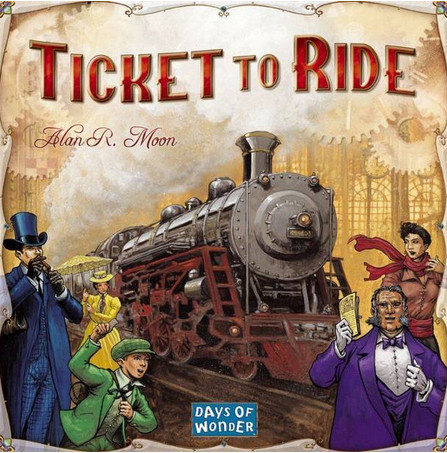
While most journey-based titles emphasize diversified exploration, Ticket to Ride® employs a route-completion model where players claim railway connections between predetermined cities to fulfill destination objectives. The digital adaptation preserves the original board game’s core mechanics while introducing AI opponents and multiplayer functionality, enabling competitive matches without physical components. Strategic depth emerges from simultaneous route-planning and opponent-blocking considerations, requiring players to balance long-term destination cards against immediate tactical opportunities. Multiple map configurations expand replayability through varied geographical layouts and rule modifications. The $6.99 price point provides accessible entry into strategic board games without subscription restrictions or microtransactions. This autonomy-preserving model grants unlimited access to base content, allowing players freedom to engage at their preferred pace across solo and multiplayer formats.
Tsuro – Path Creation Game


Unlike route-completion models that require destination fulfillment, Tsuro – The Game of the Path implements a survival-based mechanic where players extend continuously flowing pathways through tile placement while avoiding elimination through board-edge exits or path collisions. This digital adaptation translates the strategic board game into accessible formats across Android ($4.99) and iOS ($3.99) platforms.
The core gameplay loop demands tactical tile selection from limited hand options, forcing players to balance immediate path extension against opponent interference potential. Each placement creates branching possibilities that simultaneously advance personal positioning while constraining rival movement options.
Single-player and multiplayer modes accommodate various play preferences, with the latter introducing direct competitive dynamics. The streamlined ruleset facilitates rapid session completion, making these games great for unrestricted experimentation with spatial strategy concepts without extended time commitments or complex mechanical barriers.
Unmatched: Tactical Dueling Game
Through asymmetric deck construction and tactical positioning mechanics, Unmatched: Tactical Dueling Game establishes character-specific combat systems where individual fighters deploy unique card abilities across modular battlefield configurations. This digital adaptation transforms the physical board experience into accessible online multiplayer matches, preserving strategic depth while eliminating setup constraints.
Players select from mythical and fictional combatants, each operating through distinct mechanical frameworks that reward mastery of character-specific synergies. Fast-paced combat sequences demand precise resource management and positional awareness as opponents exploit tactical advantages. AI modes provide training grounds for competitive development, while multiplayer facilitates unrestricted competitive freedom.
At $7.99, the base package delivers immediate value among games to play, with optional character packs expanding roster diversity. The system rewards strategic experimentation and adaptive thinking without restrictive progression barriers.
Reiner Knizia Yellow & Yangtze
Reiner Knizia Yellow & Yangtze deploys tile-placement mechanics within a conflict-driven framework where players position leaders across four distinct resource categories—soldiers, farmers, traders, and governors—to establish territorial dominance. This strategy board game emphasizes political maneuvering and resource optimization, requiring calculated decisions about territorial expansion and defensive positioning. The fast-paced gameplay allows solo sessions within 15 minutes, accommodating players seeking substantial strategic depth without extended time commitments. Multiplayer functionality supports both real-time and asynchronous formats, allowing players maximum scheduling flexibility. The 2-to-4 player configuration scales effectively across different group sizes, maintaining tactical complexity regardless of participant count. At $9.99, the title delivers premium strategic mechanics with significant replayability through variable board states and competitive dynamics. The design appeals similarly to casual participants and dedicated strategists seeking conflict-oriented gameplay systems.
Yellow & Yangtze Mechanics
The core tile-placement system operates through a structured turn sequence where each player executes exactly two actions from a fixed set of options: place a civilization tile on the board, position a leader token in an existing region, initiate a revolt against opposing leaders, or resolve a war between competing factions.
| Resource Type | Strategic Function | Victory Constraint |
|---|---|---|
| Soldiers (Red) | Military conflicts | Lowest score counts |
| Farmers (Green) | Resource generation | Lowest score counts |
| Governors (Black) | Territory control | Lowest score counts |
| Artisans (Blue) | Monument construction | Lowest score counts |
| Traders (Yellow) | Commercial expansion | Lowest score counts |
Unlike games similar to Tokaido emphasizing peaceful journeys, Yellow & Yangtze demands tactical aggression around the table. Players cannot Work Together—direct confrontation determines territorial supremacy through calculated tile placement and leader positioning.
The Castles Of Burgundy

The $9.99 digital adaptation preserves the original’s strategic depth while offering solo and multiplayer modes. Success requires evaluating multiple optimization paths simultaneously—shipping routes, livestock farming, scientific advancement—each generating distinct point-scoring opportunities. All game components remain property of their respective owners. The mechanical intricacy and replayability appeal specifically to tactical-minded players seeking freedom from luck-dependent outcomes through skillful mitigation strategies.
Wingspan: Avian Engine Builder

Elizabeth Hargrave’s 2019 Kennerspiel des Jahres winner establishes a tableau-building system where players deploy bird cards across three distinct habitat rows—forest, grassland, and wetland—each activating progressively more powerful action sequences as avian populations increase. Every player manages four core actions: drawing birds, gathering food via custom dice, laying eggs, or cycling cards for ideal hand management. Wingspan presents 170+ species, each featuring distinct point values, food requirements, habitat restrictions, and triggered abilities that compound strategically throughout the 40-70 minute runtime. The engine-building framework rewards forward planning as earlier placements unlock efficiency gains in subsequent rounds. Scaling from 1-5 participants without requiring mechanical adjustments, this great game balances accessible rules with strategic depth, appealing similarly to newcomers seeking elegant systems and veterans pursuing optimization paths through tableau synergies.