Board game designers have consistently drawn inspiration from Sid Meier’s Civilization series, translating its core mechanics into tabletop experiences that emphasize resource allocation, technological advancement, and territorial expansion. These adaptations typically feature engine-building elements, asymmetric player powers, and multiple victory conditions that mirror the digital franchise’s strategic complexity. Modern civilization-style games incorporate refined mechanics like action selection, area control, and economic development systems. Nevertheless, selecting the ideal title requires careful consideration of specific gameplay elements and group dynamics.


Key Takeaways
- Through the Ages offers deep civilization progression with technological advancement, resource management, and multiple victory paths over 2-4 hours of strategic gameplay.
- Tapestry features asymmetric civilizations with unique abilities, modular boards, and streamlined mechanics that create diverse strategic approaches in each playthrough.
- Civilization: A New Dawn provides accessible entry with modular boards, flexible technology trees, and familiar civilization themes without overwhelming complexity.
- Nations emphasizes historical progression through card-driven worker placement mechanics, focusing on civilization development rather than traditional territorial expansion.
- Clash of Cultures (Monumental Edition) delivers intricate city management, flexible technology advancement, and deep strategic planning for experienced civilization game enthusiasts.
What Makes a Great Civilization-Style Board Game
When evaluating civilization-style board games, strategic depth emerges as the primary criterion that separates exceptional titles from mediocre offerings. A superior strategy game integrates resource management mechanics with technological progression trees, creating layered decision spaces where players must balance immediate tactical gains against long-term strategic positioning. Effective designs incorporate multiple victory conditions, preventing dominant strategies from emerging while maintaining player agency throughout extended gameplay sessions.
Asymmetric faction abilities generate distinct strategic pathways, forcing players to adapt their approaches based on civilization-specific strengths and limitations. Successful titles like “Through the Ages” demonstrate how complex interaction systems reward mastery while remaining accessible to dedicated players. The ideal civilization strategy game provides meaningful choices at every decision point, ensuring that player skill directly correlates with civilization development outcomes across varied gameplay scenarios.
Root: Asymmetric Woodland Warfare
Root — A Game of Woodland Might and Right
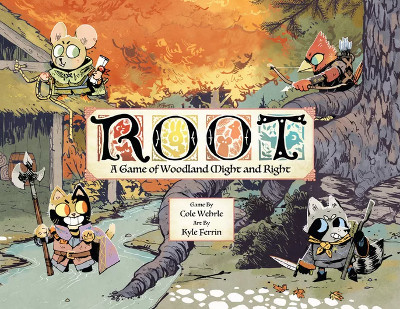
- Publisher: Leder Games
- Category: Fantasy Board Game
- Author: Cole Wehrle, Kyle Ferrin
- Release Year: 2018
- Suitable For: Ages 10+
- Game Length: 60 – 90 Minutes
Root exemplifies asymmetric faction design principles through four fundamentally different civilizations locked in territorial warfare across a shared woodland map. This board game delivers strategic depth through faction-specific victory conditions and unique mechanical frameworks that prevent static gameplay patterns.
Each faction operates under distinct rules governing movement, combat, and resource generation:
- Marquise de Cat controls through industrial dominance and building construction
- Eyrie Dynasties expand via programmed decree sequences that risk governmental collapse
- Woodland Alliance spreads influence through guerrilla warfare and popular uprising mechanics
- Vagabond pursues individual quests while manipulating faction relationships
The asymmetric design creates dynamic strategic tensions where players must simultaneously optimize their faction’s strengths while countering opponents’ specialized advantages. Territory control intersects with resource management as factions compete for woodland clearings, creating emergent tactical situations that reward adaptive thinking over memorized strategies.
Brass: Birmingham: Industrial Revolution Economics
Brass – Birmingham w/Folded Space Foam Insert
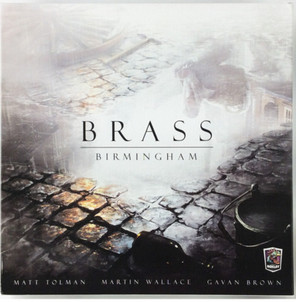
- Publisher: Roxley Games
- Genre: Strategy Board Game – Science Fiction
- Age Range: 14 Years and Up
- Number of Players: 2 – 4 Players
Players must carefully time their Canal Era investments to establish foundational infrastructure before transitioning to the more lucrative Rail Era opportunities. Factory network construction requires precise resource allocation and geographic positioning to create efficient supply chains that maximize both coal and iron flow. Strategic canal placement determines access to external markets and beer distribution networks, directly impacting the economic viability of industrial complexes throughout both game phases.

Canal Era Strategy
Mastery of the Canal Era demands careful attention to market dynamics and infrastructure development, as players must establish profitable cotton mills and potteries while securing reliable coal supplies through strategic network building.
This strategy board phase requires disciplined resource allocation and calculated risk-taking. Players who accept competitive freedom through aggressive expansion often secure early advantages, while conservative approaches may limit growth potential.
Essential Canal Era tactics include:
- Prioritize coal mines early to fuel cotton mill operations and generate steady income
- Build canal networks connecting high-demand markets before opponents block access routes
- Balance pottery investments with cotton production to diversify revenue streams
- Monitor beer demand fluctuations to capitalize on market opportunities
- Secure multiple city connections to maximize goods distribution flexibility
Success depends on adapting quickly to opponent movements while maintaining efficient supply chains throughout this foundational era.
Factory Network Building
When the Rail Era commences, factory network building becomes the primary engine for victory point accumulation and economic dominance. Players must strategically position manufacturing facilities to maximize supply chain efficiency while securing essential resources. The transition from canal-dependent infrastructure demands tactical flexibility, as rail connections facilitate expanded geographic reach for industrial operations. Factory placement requires careful analysis of market demand, resource availability, and competitor positioning. Each manufacturing facility generates income through beer consumption and coal requirements, creating interdependent economic networks. Strategic board games like Brass: Birmingham reward players who construct complementary industrial complexes rather than isolated production units. Victory depends on establishing sustainable factory networks that generate consistent revenue streams while adapting to evolving market conditions throughout both economic eras.
Ark Nova: Conservation Meets Capitalism
Ark Nova (2nd Printing)
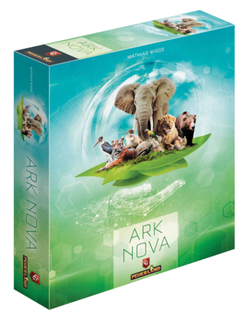
Though most civilization-building games focus on human societies, Ark Nova shifts the framework by tasking players with constructing and managing modern zoological institutions across seven strategic rounds. This tabletop game delivers complex strategic depth through its innovative action card escalation system, where repeated actions gain increasing power throughout gameplay.
Players navigate the delicate balance between profit maximization and conservation responsibility while managing diverse zoological operations:

- 255 unique cards guarantee every session presents fresh strategic combinations
- Action card power scaling creates evolving tactical opportunities each round
- Multi-layered resource management across animals, habitats, and personnel
- Conservation-capitalism tension forces meaningful ethical decisions
- Extended 2+ hour gameplay rewards deep strategic planning
The solo mode accommodates independent strategists, while competitive multiplayer challenges players to optimize zoo development against ecological imperatives, creating meaningful decision trees that mirror real-world conservation dilemmas.
Lost Ruins of Arnak: Ancient Mysteries and Strategic Depth

Lost Ruins of Arnak merges deck-building with worker placement mechanics, challenging players to investigate forgotten archaeological sites while constructing strategic card engines across five demanding rounds. The game’s distinctive action queue system escalates card power progressively, forcing calculated resource allocation decisions that separate tactical players from reactive ones. With 255 unique cards generating substantial variability, each ninety-minute session delivers fresh strategic possibilities for one to four adventurers.
Players must balance archaeological expeditions against research advancement, managing fear tokens while acquiring artifacts that fuel increasingly powerful combinations. The dual-layered mechanics reward long-term planning over opportunistic plays, as workers compete for premium board positions while decks evolve through careful curation. Games demand patience during initial setup phases, yet experienced strategists appreciate the mechanical depth that transforms simple investigation into complex optimization puzzles requiring adaptive thinking and resource efficiency.
Distilled: Building Your Liquor Empire
Distilled transforms players into competing distillery entrepreneurs across seven structured rounds, demanding precise ingredient procurement, efficient liquor production, and shrewd market timing to maximize scoring opportunities. Game groups will appreciate the strategic depth emerging from resource management mechanics and production optimization challenges.
The game’s 255 unique cards generate substantial replay value through varied strategic pathways:
- Ingredient acquisition requires balancing cost efficiency with production requirements
- Distillation timing creates critical decision points affecting resource allocation
- Market demand fluctuations force adaptive strategic pivots mid-game
- Production chain optimization rewards forward-thinking players with scoring advantages
- Competitive positioning intensifies through direct player interaction and resource scarcity
Intuitive core mechanics promote rapid comprehension while maintaining strategic complexity. Players must anticipate market shifts, optimize production sequences, and outmaneuver competitors to establish liquor empire dominance across the seven-round framework.
City of the Great Machine: Steampunk Revolution
City of the Great Machine employs asymmetric player roles where revolutionaries utilize hidden movement and resource management to coordinate strikes against an AI-controlled oppressive regime. The steampunk framework integrates thematic mechanics through card-driven actions, territory control, and information warfare that mirrors Civilization’s empire-building complexity through collaborative resistance networks. Players must balance individual revolutionary cell objectives with collective uprising requirements, creating strategic tension between personal advancement and faction unity similar to diplomatic negotiations in grand strategy games.
Steampunk Strategy Mechanics
When revolutionary fervor meets industrial automation, City of the Great Machine delivers asymmetric gameplay through its semi-cooperative framework where human players coordinate against an AI-controlled opponent. This board game demands tactical precision from new players maneuvering its intricate steampunk machinery.
The game’s strategic depth emerges through several core mechanics:
- Hidden movement tracking creates information asymmetry between revolutionary factions and the controlling machine
- Resource allocation systems require careful management of limited supplies across multiple operational theaters
- Area control mechanics force players to balance territorial expansion with defensive positioning
- Action programming sequences demand forward-thinking strategy execution across multiple turns
- Variable player powers provide unique abilities that reshape standard tactical approaches
Four-player minimum requirements guarantee balanced faction dynamics, while complex component interactions create meaningful decision trees that reward strategic planning over reactive gameplay.
Revolutionary Cooperative Gameplay
While revolutionary factions pursue individual victory conditions, City of the Great Machine’s semi-cooperative framework demands constant negotiation and tactical coordination between players who must simultaneously trust and suspect their allies. Hidden movement mechanics force revolutionaries to communicate vital intelligence while concealing personal objectives, creating strategic tension throughout each session’s time to play.
| Revolutionary Advantage | Machine Oppression |
|---|---|
| Coordinated strikes bypass surveillance | Omnipresent monitoring crushes dissent |
| Shared resources accelerate liberation | Resource scarcity breeds desperation |
| Unity against tyranny builds hope | Isolation feeds the machine’s control |
Four-player configurations optimize faction balance, requiring minimum group commitment for meaningful gameplay. Players must balance collective resistance against individual agenda fulfillment, with hidden information systems preventing complete transparency. Strategic depth emerges through simultaneous cooperation requirements and competitive victory paths, demanding adaptive tactical thinking.
Key Mechanics That Define Civilization Games
The foundation of civilization-themed board games rests upon several interconnected mechanical systems that simulate the complex challenges of building and managing an empire across multiple generations. These systems demand strategic thinking and careful resource allocation every time players engage with the game.
The defining mechanics include:
- Worker placement – Assigning limited workers to specific tasks like resource gathering, construction, or research
- Card drafting – Selecting technologies, resources, or events that shape civilization development
- Resource management – Balancing acquisition and expenditure of materials for infrastructure and expansion
- Asymmetric faction abilities – Unique civilization strengths creating diverse strategic approaches
- Long-term planning – Multi-turn strategic thinking toward victory through military conquest or cultural dominance
These mechanics interconnect to create deep strategic experiences requiring foresight and adaptability.
Choosing the Right Game for Your Group
Selecting an appropriate civilization-style board game requires systematic evaluation of three critical parameters that directly impact gameplay satisfaction. Player count determines the available strategic interactions and territorial competition, with games ranging from intimate two-player duels to expansive six-player empires that alter diplomatic dynamics and resource scarcity. Complexity level must align with group experience to prevent analysis paralysis among novices or strategic boredom among veterans, while game duration establishes whether sessions accommodate quick tactical engagements or extended strategic campaigns requiring sustained attention spans.
Player Count Considerations
Scalability defines the fundamental architecture of civilization board games, with each title designed for specific player thresholds that directly impact strategic depth and mechanical execution. Player Dynamics shift dramatically based on participant count, fundamentally altering victory conditions and resource competition patterns.
Strategic considerations for ideal player selection:
- Two-player formats like “7 Wonders Duel” eliminate negotiation variables, creating pure tactical confrontations
- Small groups (2-4 players) in “Through the Ages” maximize individual agency while maintaining competitive tension
- Large assemblies (6-8 players) facilitate “Twilight Imperium’s” diplomatic complexity and alliance mechanics
- Complexity correlation determines minimum viable participants – intricate systems require sufficient players for mechanical activation
- Interaction intensity varies from “Terraforming Mars’” competitive resource denial to cooperative civilization-building frameworks
Each configuration generates distinct strategic environments requiring adapted tactical approaches.
Complexity Vs Experience
Experience Levels dictate ideal game pairing: beginners require accessible entry points like “7 Wonders Duel” offering strategic depth without overwhelming rule density, while expert players welcome “Clash of Cultures’” civilization progression mechanics. “Twilight Imperium” exemplifies maximum complexity requirements, demanding significant time investment and advanced strategic planning capabilities from dedicated gaming groups seeking thorough civilization simulation experiences.
Game Length Preferences
While complexity determines cognitive demands, time allocation fundamentally shapes group dynamics and player satisfaction in civilization-themed board games. Game Duration directly correlates with strategic depth and player engagement levels.
Strategic considerations for ideal session planning:
- Epic campaigns like Twilight Imperium demand 8-12 hours, requiring dedicated groups committed to immersive empire-building experiences. Find similar games like Twilight Imperium here.
- Medium-weight options such as 7 Wonders and Imperial Settlers deliver strategic depth within 60-90 minutes, balancing accessibility with meaningful decisions
- Quick tactical games like Race for the Galaxy provide civilization mechanics in under 30 minutes for rapid-fire sessions
- Heavy strategy titles including Through the Ages require 2-4 hours, demanding patient groups who appreciate complex economic engines
- Mixed-group solutions prioritize medium-length games that accommodate varying attention spans while maintaining strategic integrity
Understanding group tolerance levels guarantees ideal game selection and sustained player engagement throughout extended civilization campaigns.
Alternative Titles Worth Exploring
Beyond the traditional civilization-building stalwarts lies a collection of mechanically distinct titles that capture the essence of empire development through innovative systems. Tapestry delivers asymmetric faction gameplay through hexagonal expansion and four-track advancement, creating emergent Cultural Influence patterns across civilizations. Civilization: A New Dawn utilizes modular board construction with streamlined action selection, maintaining the franchise’s strategic depth while reducing complexity barriers. Clash of Cultures (Monumental Edition) provides extensive customization through flexible technology trees and intricate city management systems, demanding substantial time investment for maximum strategic payoff. Nations eliminates traditional maps entirely, focusing on card-driven worker placement mechanics that simulate historical progression from prehistoric eras through World War I, proving that civilization games can thrive without territorial conquest as the primary victory condition.