Settlers of Catan revolutionized tabletop gaming with its accessible resource management and negotiation mechanics. Similar titles extend this foundation in distinct directions. Games like 7 Wonders streamline civilization building through card drafting, while Scythe combines resource gathering with area control. Each design offers strategic depth without excessive complexity. Players build engines, manage limited resources, and pursue multiple victory paths—often within compact 60-90 minute sessions. The following exploration reveals how these games build upon Catan’s legacy.
Key Takeaways
- Fast-paced civilization-building games offer strategic depth in shorter 30-minute sessions compared to Catan’s lengthy gameplay.
- Resource management systems with deterministic mechanics provide more strategic control than Catan’s dice-based randomness.
- Multiple victory pathways through scientific advancement, commerce, or military dominance create diverse strategic options.
- Games supporting up to seven players feature competitive gameplay with dynamic player interactions between neighboring civilizations.
- Card selection mechanics allow players to build economic engines and develop unique strategies based on synergistic combinations.


Modern Resource Management Games
While Catan pioneered the modern resource management genre, today’s market offers numerous titles that build upon its foundational mechanics. Games like “Agricola” and “Stone Age” introduce sophisticated resource collection systems that demand intricate strategic planning. These titles often feature modular board setups that dramatically increase replayability by creating varied gameplay experiences with each configuration.
- Worker placement mechanics that force players to prioritize actions under competitive constraints
- Action chaining systems that reward long-term strategic thinking and efficiency
- Improved player interaction through subtle trading and competition systems
- Layered complexity that provides satisfying decision trees without overwhelming players
The evolution beyond Catan’s foundation has created a rich ecosystem of resource management games that balance accessibility with strategic depth. These games maintain the freedom to pursue multiple victory paths while challenging players with more sophisticated decision-making frameworks.
Cosmic Encounter’s Alliance System
The alliance system in Cosmic Encounter represents one of tabletop gaming’s most influential diplomatic frameworks, fundamentally transforming player interaction compared to Catan’s more straightforward trading mechanics. Unlike Catan’s resource bartering, Cosmic Encounter facilitates temporary partnerships during attacks and defense, creating a constantly shifting power dynamic.
| Alliance Aspect | Strategic Impact |
|---|---|
| Temporary Partnerships | Creates fluid game state |
| Betrayal Mechanics | Introduces trust calculations |
| Alien Race Powers | Modifies alliance dynamics |
| Invitation System | Cultivates negotiation skills |
| Shifting Loyalties | Generates exciting outcomes |
This system enhances social interaction to a central game mechanic, not merely a byproduct. Each alien race’s unique powers directly influence alliance formation strategies, compelling players to constantly reassess their diplomatic position. The resulting unpredictability delivers a freedom-oriented experience where today’s ally may become tomorrow’s target.
Deus’s Modular Building System
Deus presents a sophisticated civilization-building experience through its modular building system, where players construct buildings from six distinct categories: Production, Science, Civil, Military, Maritime, and Temple structures. Each building type generates specific resources while triggering powerful chain reactions that can activate previously constructed buildings of the same category.
The game’s innovative deck-building mechanics allow players to customize their available actions by acquiring building cards that remain permanently accessible once constructed. This creates an escalating sense of power as civilizations develop increasingly efficient resource generation and action combinations.
| Building Category | Primary Function | Chain Activation Benefit |
|---|---|---|
| Production | Generate basic resources | Multiplies resource output |
| Science | Advance technology track | Unlocks powerful abilities |
| Civil | Score immediate points | Creates scoring synergies |
| Military | Enable conquest actions | Facilitates territorial expansion |
| Maritime | Acquire trade goods | Generates commercial advantages |
| Temple | Provide diverse benefits | Offers flexible strategic options |
The modular board system ensures high replayability, as different continent configurations create varied strategic landscapes that demand adaptive approaches. Players must balance immediate resource needs against long-term engine optimization while competing for limited territory and trade opportunities.
Concordia’s Trade Route Optimization
Concordia elevates the trading mechanics found in Catan through its sophisticated merchant movement system across the ancient Roman Mediterranean. Players deploy merchants along established trade routes to establish houses in cities, gaining access to resources and creating increasingly valuable trade networks.
The game’s card-driven action system replaces dice randomness with strategic hand management, where each personality card provides specific actions for movement, construction, or resource acquisition. Players must carefully sequence their card plays to maximize efficiency while planning for the card retrieval mechanics that refresh their available actions.
What distinguishes Concordia’s approach is its emphasis on route optimization and geographic positioning. Success depends on identifying profitable trade corridors and establishing presence in cities that provide synergistic resource combinations. The scoring system rewards specialization in specific goods while encouraging territorial expansion across diverse regions.
The game maintains Catan’s accessible trading theme while introducing deeper strategic layers through its modular maps, variable personality cards, and multiple expansion options that significantly extend replayability without overwhelming complexity.
Root’s Asymmetric Factions
Root – A Game of Woodland Might and Right
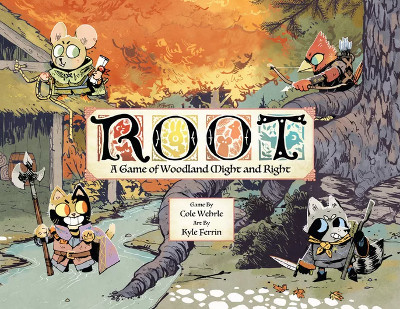
Unlike Catan’s balanced starting positions, Root raises asymmetric gameplay to unprecedented levels through its four distinct factions that operate under fundamentally different rulesets. Each faction pursues victory through entirely unique mechanics: the Marquise de Cat establishes economic dominance through building construction and resource gathering; the Eyrie Dynasties expand through programmatic action sequences that risk collapse if unfulfilled; the Woodland Alliance spreads sympathy and incites rebellions as guerrilla insurgents; and the Vagabond navigates the woodland as a solo adventurer, trading and completing quests.
These asymmetrical factions create a dynamic ecosystem of interactions where players must master not only their own strategies but understand opponents’ mechanics to effectively counter them. This complexity offers unprecedented freedom in playstyle choices while maintaining competitive balance—a revolutionary departure from Catan’s more standardized approach.
Pandemic’s Cooperative Crisis Management
Where Root introduces conflict through asymmetric faction dynamics, Pandemic shifts the board game framework entirely by featuring cooperative gameplay as its core mechanism. This innovative board game replaces competition with teamwork, requiring players to coordinate strategy and resources against escalating disease outbreaks.
| Game Element | Strategic Function |
|---|---|
| Unique Roles | Specialized abilities improve team capabilities |
| Modular Board | Creates dynamic city networks requiring tactical navigation |
| Resource Management | Forces prioritization of limited actions per turn |
| Outbreak Mechanics | Escalates tension through accelerating crisis points |
| Expansions | Introduces additional challenges for increased complexity |
The game’s crisis management system forces strategic decision-making as players must collectively determine ideal movement patterns, resource allocation, and containment priorities. Pandemic’s cooperative design has revolutionized tabletop gaming by demonstrating how shared objectives can create compelling gameplay tension without player-versus-player conflict.
Scythe’s Engine Building Mechanics
Scythe – The Rise of Fenris

Acclaimed for its intricate resource conversion mechanisms, Scythe presents players with a sophisticated engine-building experience set in an alternate 1920s Eastern European environment. The gameplay revolves around strategic resource generation of metal, wood, and food that fuel each faction’s expansion and capabilities.
Players navigate a unique action selection system where decision-making evolves dynamically as their engines develop. By building structures, upgrading actions, and recruiting workers, participants create increasingly efficient resource cycles. The game’s depth emerges through asymmetric faction abilities, providing distinctive strategic options and unique strengths that shape interaction patterns with opponents.
The modular board layout guarantees varied gameplay experiences, as territory control and resource positioning significantly impact engine development. This spatial element adds another dimension to player interactions, requiring adaptive strategies as factions compete for dominance across the meticulously designed setting.
Wingspan’s Bird Card Habitats
Wingspan’s innovative habitat system forms the core of its tableau-building mechanics, dividing player boards into three distinct environments: Forest, Grassland, and Wetland. Each habitat allows specific actions essential for resource management: Forests provide food tokens, Grasslands assist egg-laying, and Wetlands permit drawing bird cards.
Players strategically place birds in compatible habitats, leveraging their unique abilities to create powerful synergies. As players expand across their board, they can activate habitats in sequence to optimize resource generation. This tactical decision-making process requires balancing immediate needs with long-term strategies.
The habitat system brilliantly connects thematic elements with gameplay mechanics, as each bird’s abilities correspond naturally to its preferred environment. Expert players maximize points by carefully constructing combinations of birds whose abilities complement one another, creating efficient engines that generate cascading benefits across all three habitats.
Azul’s Tile Placement Strategy
Azul’s elegant tile placement system creates a delicate balance between tactical selection and strategic arrangement, requiring players to draft colored tiles from factory displays to their personal game boards. The scoring mechanics incentivize thoughtful tile management, rewarding players who complete rows, columns, and specific patterns while penalizing those who accumulate excess tiles.
The interactive nature of Azul emerges through its shared tile pool, where each player’s selection directly impacts others’ available options. This creates a subtle layer of player interaction without direct conflict. Successful strategy hinges on anticipating opponents’ needs while advancing personal board patterns.
What distinguishes Azul from other tile-based games is how it combines accessibility with depth—players must constantly evaluate immediate points against long-term scoring potential, making each round a careful exercise in balancing opportunity and risk.
Wonders Card Drafting
The strategic depth of 7 Wonders emerges through its elegant card drafting mechanism, where players simultaneously select one card from their hand before passing the remainder to adjacent players. This creates a dynamic decision space reminiscent of Catan’s resource-based gameplay but with faster pacing across three distinct ages.
Unlike Catan’s dice-driven resource acquisition, 7 Wonders implements a more deterministic resource management system where players deliberately build their economic engines through careful card selection. The military strength component introduces competitive tension between neighboring civilizations, scoring victory points through tactical confrontations.
With support for up to seven players and compact 30-minute sessions, 7 Wonders delivers strategic gameplay depth without Catan’s sometimes lengthy playtime. Players focus on building their civilization through synergistic card combinations, creating varied pathways to victory through scientific advancement, commercial prowess, or military dominance.