Submarine board games operate on mechanics that demand precise tactical execution and resource allocation. Titles like Gato Leader and Silent Victory employ dual-map systems, hidden movement protocols, and historical campaign frameworks that challenge players to balance offensive strikes with defensive positioning. The genre’s appeal rests on its component integration and rule complexity, which establish authentic naval combat scenarios. What separates exceptional designs from standard offerings becomes evident through their specific mechanical implementations.


Key Takeaways
- Gato Leader offers immersive WWII submarine command with dual-map system and tactical combat using modified d10 contact rolls.
- Silent Victory delivers 30-45 minute tactical operations with historical captains, chart flipping mechanics, and career progression achievements.
- Stealth gameplay mechanics emphasize battery management, sonar detection, hidden movement positioning, and resource conservation for strategic depth.
- Modern submarine hunting expands detection systems with radar modifications, torpedo upgrades, and asymmetric information for tactical precision.
- Submarine warfare games demand rigorous mission planning, damage management systems, autonomous patrol decisions, and strategic upgrade path choices.
Submarine Warfare Strategy Games
These games demand rigorous mission planning and tactical maneuvers:
- Damage management systems requiring strategic component allocation
- Patrol mechanics with autonomous decision-making frameworks
- Strategic upgrade paths affecting squadron capability
- Hidden information mechanics enforcing operational uncertainty
Each title prioritizes player autonomy in tactical choice-making, delivering authentic submarine command experiences without compromise.
Gato Leader: Pacific Naval Combat
Gato Leader – The Battle for the Pacific
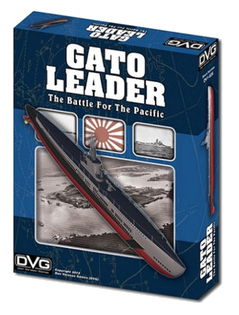
By immersing players in command of U.S. Navy submarines during WWII, Gato Leader delivers authentic naval strategy through streamlined mechanics. The dual-map system—Campaign Map for strategic positioning and Tactical Display for detailed combat—creates layered decision-making opportunities. Contact rolls using modified d10s determine enemy vessel location, requiring calculated risk assessment at every turn.
Submarine tactics evolve through player choice. Wolfpack formations facilitate coordinated attacks, while Crash Diving provides evasion options. Equipment upgrades like Radar and Torpedo Modifications significantly alter gameplay approaches, rewarding experimentation and tactical flexibility.
Victory Points accumulate through successful ship sinkings, making resource management and strategic planning crucial. The game’s mechanical depth respects player autonomy, offering multiple viable approaches to achieving objectives without arbitrary restrictions.
Silent Victory: Submarine Tactics
While Gato Leader emphasizes strategic positioning across dual maps, Silent Victory: U.S. Submarines in the Pacific, 1941-45 pivots toward tactical submarine operations through innovative chart flipping and dice mechanics. Players command historical vessel captains, each possessing unique abilities that define their operational approach.
The game mechanics demand calculated decision-making during patrol missions. A damage system directly impacts submarine performance, forcing commanders to employ stealth approach tactics and resource management for survival. Players navigate threats through tactical maneuvering while pursuing enemy vessels.
Sessions conclude in 30-45 minutes, delivering substantial depth without excessive time investment. High replayability emerges from diverse historical commanders and mission variables. Success yields career progression through achievements like the Navy Cross, rewarding players who master submarine tactics and successfully balance aggression with survival instincts.
They Come Unseen: Stealth Gameplay
| Stealth Mechanic | Detection Tactic |
|---|---|
| Battery Management | Sonar Search Coordination |
| Snort Maneuver Execution | Acoustic Signature Monitoring |
| Hidden Movement Positioning | Active Ping Deployment |
| Resource Conservation Strategy | Station Engagement Timing |
NATO commanders navigate critical battery depletion through calculated snort maneuvers—surfacing briefly to recharge while evading detection. Soviet Ice Stations employ sonar searches as primary detection tactics, forcing submarine players toward continuous evasion. This stealth mechanics framework demands meticulous resource allocation and psychological warfare, where superior detection tactics determine mission success and operational survival.
Modern Submarine Hunting Mechanics
Modern submarine hunting mechanics expand upon stealth frameworks by introducing systematic detection and engagement systems that reward tactical precision and resource optimization. Games like “Gato Leader” allow players to equip submarines with Radar and Torpedo modifications, directly enhancing vessel capabilities during engagements. The hidden movement mechanic creates asymmetric information states where hunters employ sonar detection to locate adversaries, while submarines manage battery reserves to evade pursuit. Evasion tactics allow players to absorb damage strategically, emphasizing survivability through calculated resource allocation. These mechanics transform submarine hunting from random chance into deliberate decision-making, where upgrades meaningfully impact tactical outcomes. Players balance offensive capability against defensive positioning, creating layered strategic depth that distinguishes modern submarine board games through their rules-driven approach to undersea warfare simulation.
Gato Leader: Realistic Submarine Command
Owing to tactical submarine warfare demands precise positioning and engagement mechanics, Gato Leader operationalizes historical WWII Pacific naval combat through a dual-map infrastructure combining strategic and tactical elements. The Campaign Map governs fleet positioning, while the Tactical Display manages individual engagements with granular detail. Players execute contact rolls using d10 dice, modified by environmental and tactical variables, establishing probability-based ship detection. This game mechanics framework emphasizes decision-making consequences over chance alone. Tactical advancements materialize through submarine upgrades—Radar and Torpedo Modifications—that fundamentally alter combat effectiveness and strategic options. The inclusion of historically-accurate U.S. Navy submarine types, differentiated by service periods, reinforces authenticity while enabling varied playstyles. Gato Leader delivers unrestricted command authority, allowing players autonomous operational decisions within mechanically sophisticated constraints that echo genuine submarine warfare’s complexity.
Gato Leader: Historical Campaign Play
The historical campaign framework transforms Gato Leader into a longitudinal operational experience spanning 1942 through 1945, wherein players command multiple submarines across sequential missions to accumulate Victory Points through merchant and warship destruction. Campaign lengths remain player-selectable, enabling customized engagement with the war’s progression. Special Option Points introduce variable gameplay dynamics, allowing commanders to prioritize distinct tactical doctrines. The dual-map system—Campaign Map for strategic positioning and Tactical Display for granular engagement resolution—facilitates decision-making across operational scales. Contact rolls employ modified d10 mechanics influenced by numerous factors, generating probabilistic hunt outcomes. Historically-accurate submarine classes reflect actual service periods, with accessible upgrade paths including Radar and Torpedo Modifications. This framework transforms sequential missions into a united campaign experience rather than isolated encounters.
They Come Unseen: Osprey Games Design
| Core Mechanic | Function |
|---|---|
| Battery Management | Resource depletion requiring tactical “snort” maneuvers |
| Hidden Deployment | Secret unit positioning creating information asymmetry |
| Sonar Searches | Active detection generating strategic tension |
| Asymmetric Victory | Distinct NATO and Soviet operational objectives |
Player strategy hinges upon balancing offensive capability against energy conservation. The design authentically mirrors submarine warfare complexity, earning community recognition for mechanically sophisticated gameplay that rewards disciplined tactical thinking over chance-dependent systems.