Airplane-themed board games encompass a broad mechanical spectrum, ranging from cooperative dice-allocation frameworks to competitive route-building systems. Sky Team restricts inter-player communication while requiring precise dice placement across sequenced control stations. Pan Am integrates worker placement, bidding, and stock acquisition across seven structured rounds. Now Boarding employs real-time sand timer mechanics within a cooperative delivery context. Yukon Airways incorporates engine-building progression, while Tin Goose eliminates mid-game randomness through fixed card distribution. Further exploration reveals additional strategic distinctions across each title.
Key Takeaways
- Sky Team is a cooperative two-player dice game where players take pilot roles, lasting about 15 minutes per session.
- Pan Am is a competitive route-building game for 3-4 players combining worker placement, bidding, and stock mechanics across seven rounds.
- Now Boarding is a cooperative pick-up-and-deliver game for 2-5 players featuring real-time sand timer execution and passenger management.
- Yukon Airways is a mid-weight dice game focused on passenger delivery and engine-building mechanics, best experienced with two players.
- Tin Goose simulates 1930s-40s airline operations using a fixed 96-card deck, with sessions running 90-150 minutes.
Sky Team

Sky Team is a two-player cooperative dice game in which one player assumes the role of pilot and the other co-pilot, with each session lasting approximately 15 minutes. Players allocate rolled dice across Control Panel stations—Engines, Axis, Landing Gear, Flaps, Radio, and Brakes—each governed by strict sequencing protocols. Communication restrictions limit interaction to die placement, demanding implicit coordination. Concentration spaces provide mitigation mechanisms, while Special Ability cards introduce strategic variables. Multiple failure conditions, including crashes and improper landings, sustain tension throughout gameplay. Real-airport-based scenarios and mini-expansion integration guarantee meaningful replayability. The design prioritizes intuitive accessibility, though advanced scenarios introduce pronounced dice-luck dependencies. Sky Team rewards recursive play between consistent partners, earning four stars for its efficient balance of cooperative strategy and escalating mechanical pressure.
Pan Am

Pan Am is a three-to-four-player competitive board game blending route-building mechanics with worker placement bidding and stock acquisition, each session spanning approximately sixty minutes. Players strategically expand networks while timing Pan Am stock purchases against fluctuating share prices driven by Event Cards.
Core operational mechanics include:
- Engineer deployment as auction bids for airports, aeroplanes, routes, and Directive cards
- Route claims requiring endpoint infrastructure and aeroplane-to-route-value compatibility
- Seven-round structure with dice-driven Pan Am expansion affecting stock valuations
- Directive cards introducing variable randomness within otherwise structured gameplay
Component quality remains commendable—distinct aeroplane sizing, solid worker pawns, clear rulebook—though the six-fold board creates storage inefficiencies. Priced at £25, Pan Am delivers competent intermediate-level gameplay with thematic coherence, though experienced players may find its mechanics insufficiently transcendent.
Now Boarding
Now Boarding, released in 2018 by Fowers Games, is a cooperative pick-up-and-deliver game accommodating two to five players, wherein participants manage airline operations through alternating planning and real-time execution phases. Passengers accumulate anger cubes for delays, triggering complaints after four cubes, with three complaints ending the game. Successful deliveries generate revenue for plane upgrades, sustaining engagement against escalating passenger demands.
The real-time execution phase employs sand timers—15 seconds for two to three players, 30 seconds for four to five—mitigating analysis paralysis while promoting simultaneous cooperative decision-making. Soft real-time mechanics permit mid-phase rules clarification, balancing strategic flexibility against frantic execution. The compact component set features a visually coherent board, though small aircraft pieces present maneuverability challenges. Overall, the upgrade pathway and cooperative framework deliver meaningful replay potential.
Yukon Airways
Yukon Airways by Asmodee
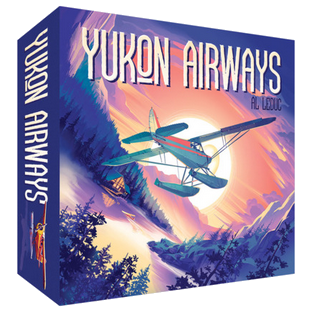
Yukon Airways, recognized as Game of the Month for October 2022, is a mid-weight board game in which players transport rolled dice as passenger proxies to matching colored cube destinations across various Yukon-region locations. Engine-building mechanics drive airplane efficiency upgrades, creating satisfying resource management loops. Key gameplay elements include:
- Dice-based passenger delivery to color-matched destinations
- Island visitation unlocking bonuses and victory points
- Incremental engine-building through upgrade synergies
- Unpredictable turn-order mechanics affecting strategic execution
Though initially underestimated aesthetically, multiple plays reveal deeper mechanical resonance. Ideal at two players, higher counts introduce downtime and disrupted planning. Currently out-of-print, the game is accessible through rental services. Its premium presentation quality doesn’t justify full retail pricing, making second-hand acquisition the strategically sound procurement approach.
Tin Goose
Tin Goose by Rio Grande Games
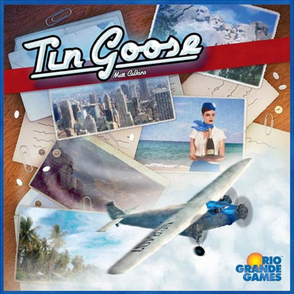
Set across the 1930s–40s, players scale from single airmail routes to full airline operations, tracking aircraft efficiency, range, and safety improvements as organizational overhead shrinks. The core mechanic utilizes a 96-card deck, of which only ~36 cards enter any session — distributed entirely at game start, eliminating mid-game randomness. This structure transforms disaster events — crashes, strikes, oil shocks — into deductive intelligence: observing bidding behavior on safer aircraft reveals opponents’ held calamity cards. Sessions run 90–150 minutes, recommended for ages 14+.
Air Baron
Air Baron by Avalon Hill
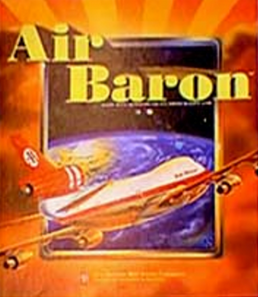
Air Baron, published by Avalon Hill and designed by Evan Davies, accommodates 2–6 players across 90–120 minutes of gameplay, positioning itself explicitly as a business simulation rather than a spiritual successor to Rail Baron. Players build air empires through strategic airport acquisition, hub dominance, and fare war management.
Core mechanics include:
- Chit-driven turns generating tactical unpredictability
- Takeover mechanics involving dice rolls, modifiers, and cash expenditures
- Hub dominance yielding $5M–$28M bonuses alongside market share gains
- International Concorde routes generating $5M–$40M revenue
Victory requires 320 market share points in four-player configurations. Nevertheless, income imbalance reinforces wealth concentration, while luck-dependent events introduce the “Catan Syndrome.” Production quality underperforms Avalon Hill’s standards, though suggested takeover restrictions could substantially recalibrate competitive balance.
Blue Skies
Blue Skies by Rio Grande Games
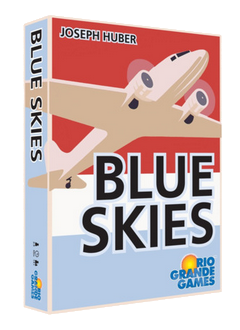
Published by Rio Grande Games in 2020, Blue Skies operates as a hybrid design integrating short-term point collection with long-term area majority mechanics, occupying a niche between casual accessibility and strategic depth. Players allocate six points per round toward airport gate acquisition, subsequently deploying cards to distribute passengers across gates, with earlier placements capturing remainder splits. Scoring escalates per passenger until reaching the 100-point threshold. Area majority mechanics introduce regional airport control bonuses, incentivizing strategic gate positioning against high-traffic nodes. Component quality remains purely functional, prioritizing utility over aesthetic appeal. Ideal engagement occurs at four to five players, where interaction density maximizes decision complexity. BGA implementation improves tracking transparency. Recommended for Winsome Games enthusiasts seeking sub-hour sessions balancing luck mitigation with positional strategy. Overall verdict: Suggest.
Aviation Tycoon
Where Blue Skies leans into area majority and gate positioning, Aviation Tycoon shifts the mechanical focus toward equity acquisition and corporate portfolio management. Designed by Ted Cheatham and published by Mr. B Games in 2017, the game tasks players with acquiring stock across four airline companies, leveraging special event and player cards to introduce variability. BoardGameGeek assigns it a score of 5.5 with a rank of 23,696.
Key mechanical considerations include:
- Stock acquisition across four distinct airline corporations
- Special event cards introducing market volatility
- Player cards enabling asymmetric strategic options
- Portfolio diversification as a core risk-management mechanism
The game carries no minimum age designation and no ratings data, leaving its accessibility profile largely undefined for prospective players evaluating competitive viability.